
What if mindful beauty isn’t about finding perfect products, but making choices that feel right for you? If you’ve wondered what is mindful beauty, the answer can feel slippery: labels such as “clean,” “vegan,” and “cruelty-free” may sound alike, yet they describe different things. Choosing more thoughtfully doesn’t mean replacing everything on your shelf.
Mindful beauty is a personal decision-making practice, not a perfection test. It starts with noticing what your skin needs, what matters to you, and which claims you want to check before you buy. A useful routine can be simple and familiar, shaped by your priorities, whether those include ingredients, animal testing, or using what you already own.
This guide will help you set priorities, read product claims more confidently, and build a realistic routine without pressure. You’ll learn how to assess labels, why claims should be checked product by product, and how to make considered choices that feel useful and manageable. The goal isn’t to follow someone else’s rules. It’s to choose with clarity and care.
Key Takeaways
- Understand what is mindful beauty as a way to choose and use products according to your needs and values, not a test of perfection.
- Set your own priorities, from personal fit and ingredients to ethical preferences, and weigh them in the order that matters to you.
- See how mindful beauty differs from “clean,” vegan, and cruelty-free claims, and why each product’s information deserves a closer look.
- Use a practical process to assess claims and compare options, starting with products you already own and replacing them only when there’s a genuine need.
- Apply your criteria to categories such as blush, facial cleanser, vegan cosmetics, and beeswax-based lip products without assuming every item makes the same claims.
What Is Mindful Beauty, and What Does It Mean in Everyday Life?
Mindful beauty means choosing and using beauty products according to considered priorities. Those priorities might include what suits your needs, which ingredients you prefer, how products are sourced, animal welfare, or whether an item has a clear role in your routine. The emphasis is on making choices deliberately, then using products with purpose.
There isn’t one correct set of priorities. You might first look for a cleanser that fits your routine, while someone else may want to check whether a product contains animal-derived ingredients. You can weigh ingredient information, sourcing, animal welfare, personal preferences, and practical use differently. Your needs can also change, so your approach can change with them.
This way of thinking connects with ethical consumerism, the idea that purchasing decisions can reflect personal values. In beauty, that doesn’t mean every purchase has to make a grand statement. It can be as simple as pausing to ask what a product is for, which information matters to you, and whether it fits your needs.
How is mindful beauty different from simply buying more products?
Mindfulness is about informed choices and purposeful use, not adding more steps. Before buying something new, consider its role: does it meet a need, replace an item you’ve finished, or offer something you genuinely want to use? If the purpose isn’t clear, pause before purchasing. A more considered routine doesn’t guarantee better skin or health; it helps you make decisions with greater intention.
Does mindful beauty require perfect choices?
No. A gradual, personal approach is valid. Learning what a label means or discovering which priorities matter to you isn’t a reason to judge what you bought before. Start where you are. You might decide to check for animal-derived ingredients when choosing your next lipstick, or look more closely at ingredient information the next time you need a cleanser.
One choice at a time is enough. You don’t have to discard products that still serve you or rebuild your routine to make it more considered. Mindful beauty is a practice of paying attention, setting your own priorities, and making the next choice with care.
The Core Principles Behind a More Mindful Beauty Routine
A useful framework doesn’t prescribe one ideal routine. It gives you principles to weigh in a way that fits your life. Start with four: personal fit, ingredient awareness, ethical preferences, and intentional use. You might put your needs first, or give animal welfare greater weight. Your priorities can differ from someone else’s and still guide thoughtful decisions.
Personal fit and intentional use
Consider whether a product suits your preferences, routine, and reason for using it. A blush you reach for often may fit better than an extra item bought because it’s trending. Intentional use also means understanding the product’s role and using what you have with purpose, rather than treating a longer routine as a goal. Before adding a step, ask what it would replace or contribute.
Ingredient awareness and clear information
Review the ingredient list and product-specific descriptions instead of relying on a broad phrase on the front of a package. Words such as “natural” or “clean” don’t, by themselves, tell you which ingredients are present or how they were sourced. The FDA’s information on cosmetic laws and regulations offers context about how cosmetics are defined and regulated; it doesn’t verify every product claim for you.
If an ingredient name is unfamiliar, look it up using a reliable reference and consider the information in context. Don’t decide that an ingredient is safe, unsafe, clean, or harmful based on its name alone. Clear product details give you a stronger basis for deciding whether an item meets your criteria.
Ethical preferences, considered separately
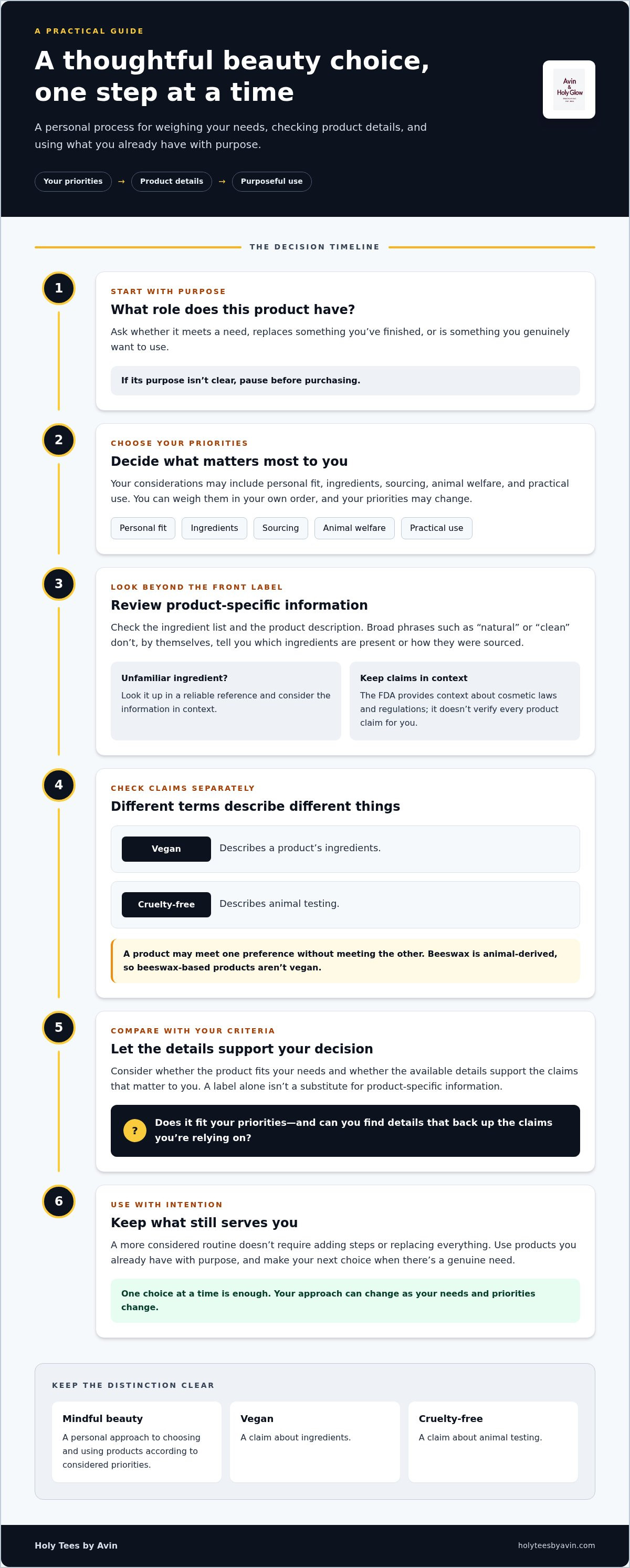
Vegan and cruelty-free describe different considerations. Vegan refers to a product’s ingredients, while cruelty-free refers to animal testing. A product may meet one preference without meeting the other, so check each claim separately. Beeswax is animal-derived, which means beeswax-based products aren’t vegan.
You don’t need to adopt every ethical preference to make considered choices. You may prioritize vegan ingredients, look for information about animal testing, or focus first on how a product fits your needs. A mindful choice depends on your stated priorities and verifiable product details, not a label alone.
Put the framework to work by comparing the information available for each item, one at a time. If you’re exploring makeup or skincare, review the beauty product information from Avin & Holy Glow and apply the same product-by-product questions to your own priorities.
Mindful Beauty vs. Clean, Vegan, and Cruelty-Free Beauty
These terms can appear together on a label, but they don’t mean the same thing. If you’re asking what is mindful beauty compared with vegan, cruelty-free, or clean beauty, the key difference is that mindful beauty describes how you make decisions. It isn’t a product certification or a fixed set of requirements.
| Term | What it generally describes | What to check |
|---|---|---|
| Mindful beauty | A personal approach to choosing and using products according to considered priorities. | Whether the product fits your needs and whether its details support the claims that matter to you. |
| Clean beauty | A broad marketing phrase that brands and retailers may use differently. | Specific ingredient, sourcing, or testing information behind the wording. |
| Vegan | A product made without animal-derived ingredients. | The product’s ingredient information. Beeswax, for example, is animal-derived. |
| Cruelty-free | A claim about animal testing, not whether a product contains animal-derived ingredients. | Product-specific information or substantiation for the claim. |
The table offers a starting point, not a guarantee about any individual product. A mindful approach connects each claim to the information that would support it, then asks whether it matches your priorities.
Is vegan the same as cruelty-free?
No. The terms refer to different considerations and aren’t interchangeable. Vegan concerns ingredients; cruelty-free concerns animal testing. A product could avoid animal-derived ingredients without establishing its animal-testing status, or make a cruelty-free claim while containing an ingredient such as beeswax. Check the specific product details instead of assuming that one label, or a brand-wide category, answers both questions.
What should shoppers know about clean beauty claims?
“Clean” can mean different things depending on the brand or retailer using it. The phrase alone doesn’t tell you which ingredients a product contains, how they were selected, or whether the formula suits your preferences. The label by itself also doesn’t prove a product’s safety or suitability for you.
Look for clear, specific information behind the claim. Review the ingredient list and any product-level explanation, and seek reliable references if a term is unfamiliar. If the details don’t explain what “clean” means in that instance, treat the word as a starting point for questions, not as proof. This makes it easier to compare products without letting similar-sounding labels make the decision for you.
How to Make Mindful Beauty Choices Without Rebuilding Your Whole Routine
To put what is mindful beauty into practice, start with what you already use. You don’t need to clear your shelf or adopt a strict routine. Use this flexible process the next time you’re considering a product:
- Identify a need. Ask what role the product would serve. Are you replacing something you’ve finished, or addressing a gap in your routine?
- Choose your priorities. Decide which factors matter most for this purchase, such as personal preferences, ingredients, or a particular ethical claim. You can choose different priorities for different products.
- Review the current details. Read the product description, ingredient list, and use instructions. Look for information that explains a claim instead of relying on a broad label alone.
- Compare options. Use the same priorities to assess each product. If a key detail is missing or unclear, pause or seek clarification rather than making assumptions.
- Reflect after using it. Consider whether the product served its intended purpose and fits your preferences. Let that experience inform a future choice without expecting a particular skin or health outcome.
There’s no need to replace a product that still meets your needs just to make your routine seem more intentional. Make changes when a genuine need arises, and assess the specific item you’re considering at that time. Product details can change, so check current information rather than relying on an old description or a brand-wide label.
What questions should you ask before choosing a product?
Start with its purpose: what do you want it to do, and does it fit your preferences? Then check the ingredients, directions for use, and any product-specific ethical claims that matter to you. If you have persistent or concerning skin issues, consult a qualified health professional rather than relying on a product label or general beauty guidance.
How can you make mindful choices sustainable over time?
Review your routine periodically, not every time a new trend appears. Use products as directed and consider whether a new item duplicates something you already have. Progress means making more informed choices as your needs and priorities shift. It isn’t a perfect checklist, and it doesn’t require changing everything at once.
To put these questions into practice, explore beauty product information and assess each item according to the details and priorities that matter to you.
Putting Mindful Beauty Into Practice With Avin & Holy Glow
Principles become practical when you apply them to one product at a time. Holy Tees by Avin offers beauty products across makeup and skincare, including Single Pan Blush, facial cleanser, vegan cosmetics, and beeswax-based lip products. That range is a reminder to look at the information for each item rather than assume every product shares the same ingredients or attributes.
How can shoppers assess a beauty brand’s product information?
Start with the individual product page. Review its ingredient information and the claims made about that specific item. If a vegan or cruelty-free claim matters to you, confirm it for the product rather than inferring it from the brand or category. The single pan blush guide offers a product-category example to consider as you decide which details are relevant to your priorities.
Keep the questions focused: What is the product? What information is provided? Which of your priorities does that information help you assess? If an important detail isn’t available, avoid filling in the gap with assumptions. You can pause, look for more product-specific information, or decide that the claim can’t yet guide your choice.
How can a beauty routine reflect different priorities?
Your skincare and makeup choices don’t have to follow identical criteria. For a facial cleanser, you might focus on its role in your routine and review its listed ingredients. For blush, you may be more interested in the product details and whether its use suits your preferences. A vegan serum guide can prompt questions about ingredient claims and intended use, while a guide to vegan lip gloss and beeswax lipsticks illustrates why product categories and ingredient claims deserve careful distinction.
Beeswax is animal-derived, so beeswax-based products aren’t vegan. That doesn’t determine which option is right for you; it clarifies what the product category means so you can decide according to your preferences. Check current product information before relying on vegan or cruelty-free claims.
Explore Holy Tees by Avin’s catalog with the same thoughtful approach: consider each product on its own, compare its available details with your priorities, and choose only if it fits. You can review the options at your own pace, using the criteria that matter to you.
Choose Your Next Beauty Step With Confidence
So, what is mindful beauty in practice? It’s a personal way to choose and use products according to what matters to you. Start with your needs, decide which priorities guide a purchase, and review product-specific details instead of relying on broad labels. You don’t have to replace everything or follow someone else’s routine.
Remember that vegan and cruelty-free refer to different considerations, and claims should be checked for each product. Progress can be as simple as pausing before your next purchase and choosing with clearer information.
Holy Tees by Avin is a Black woman-owned small business, with a catalog that includes vegan beauty products and beeswax-based lip products. These categories have different attributes, so review each item’s current details and confirm any claim that matters to you. Explore Holy Tees by Avin beauty products and choose with intention.
Let your routine reflect your needs and values, one considered choice at a time. You can begin right where you are.
Frequently Asked Questions
What is mindful beauty?
Mindful beauty is choosing and using beauty products according to considered priorities. Those might include personal needs, ingredient preferences, sourcing, animal welfare, or how a product fits your routine. There’s no single standard or perfect routine to follow. Start by deciding what matters to you, then review the details for each product and choose at a pace that feels manageable.
Is mindful beauty the same as clean beauty?
No. Mindful beauty is a personal approach to making choices; “clean beauty” is a broad phrase that brands and retailers may use in different ways. A clean label alone doesn’t explain a product’s ingredients, sourcing, or suitability for you. Look for specific information behind the wording, such as an ingredient list or a clear explanation of a product claim, and assess it against your own priorities.
Is vegan makeup always cruelty-free?
No. Vegan makeup refers to ingredients and means the product is made without animal-derived ingredients. Cruelty-free refers to animal testing. The claims address different considerations, so one doesn’t automatically establish the other. Check the specific product information for each claim rather than assuming that a product is cruelty-free because it’s vegan, or that every item from a brand shares the same attributes.
How do I start a mindful beauty routine?
Start with products you already use. Identify one genuine need, decide which priorities matter for that purchase, then review current product details and ingredient information before comparing options. You don’t need to replace everything or add more steps. Use products as directed, reflect on whether they suit your preferences, and let what you learn guide future choices. For persistent skin concerns, seek advice from a qualified health professional.
Are natural beauty products always better for your skin?
No. The word “natural” doesn’t automatically show that a product is more suitable for your skin or explain how its ingredients may affect you. Read the product information and ingredient list, and consider your own preferences and experience. Avoid judging a formula by a broad label alone. If you have a persistent or concerning skin issue, a qualified health professional can offer guidance tailored to you.
Can beeswax-based cosmetics be considered vegan?
No. Beeswax is animal-derived, so a cosmetic containing beeswax isn’t vegan. This distinction applies even if the product makes other claims or belongs to a category that includes vegan options. Check the ingredients and claims for the specific item you’re considering. A brand may offer both vegan beauty products and beeswax-based products, so don’t assume one item’s attributes apply across the whole catalog.

Article by
Avin
Avin is the founder and visionary behind Holy Tees by Avin, a Black woman-owned Brooklyn brand that uniquely bridges the worlds of expressive streetwear and ethical beauty. Driven by a mission to offer premium style without compromising on values, Avin curated a collection that features quality activewear, hoodies, and graphic tees paired alongside a dedicated line of vegan and cruelty-free cosmetics. Through her platform, she champions mindful living, creating high-performance skincare and beauty products that celebrate clean ingredients and sacred self-care.