
A lighter base isn’t always the more flattering choice. A cruelty-free tinted moisturizer isn’t automatically better for mature skin than foundation: it usually offers sheer, skin-like coverage, while foundation provides more coverage when you want to even out your complexion. The right option depends on the coverage, finish, and feel you prefer.
If you prefer a lighter makeup routine, look for a base that feels comfortable and doesn’t draw attention to the texture you want to soften. This guide compares coverage and shade options, explains how finish and hydration can affect the result, and outlines when tinted moisturizer may suit mature skin better than foundation. It also covers sunscreen in your routine so you can choose a formula and application approach that fit your day. The aim is a polished, natural-looking finish that feels like you.
Key Takeaways
- Match coverage to your goal: a sheer layer offers a lighter look, while foundation can provide more coverage.
- Compare ingredients and texture with your skin type in mind, including hydrating options for dry skin and oil-free formulas for oily skin.
- For mature skin, weigh comfort, finish, and desired coverage rather than assuming one base is always better.
- Choose a finish that suits your preferred look, and consider how hydration affects the way makeup sits on your skin.
- Assess shade options by undertone and depth, and treat tinted moisturizer with SPF as part of, not always a replacement for, your sun-protection routine.
1. Light, medium, and full coverage options
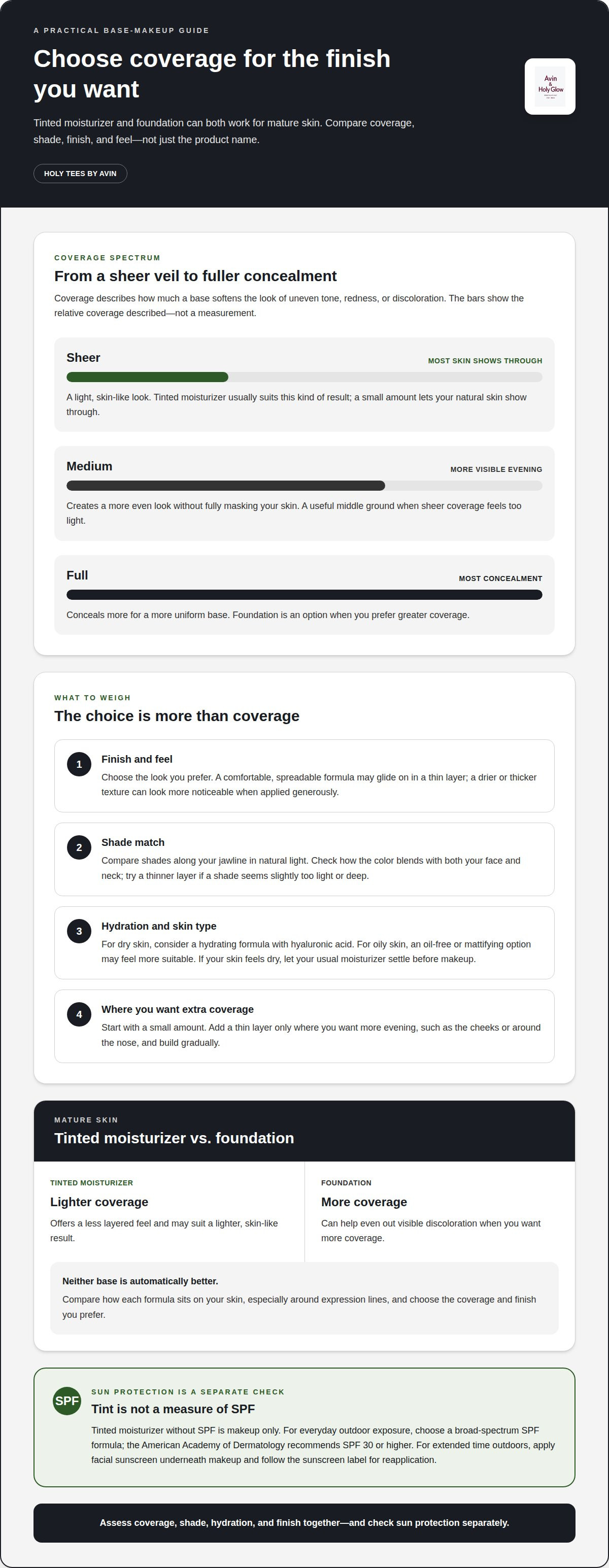
Coverage describes how much a base product softens the appearance of uneven tone, redness, or discoloration. Sheer coverage lets more of your natural skin show, while medium coverage creates a more even look without fully masking it. Full coverage conceals more for a more uniform base. A cruelty-free tinted moisturizer usually suits a lighter, skin-like result, but the label alone doesn’t tell you how much coverage it provides. Read the product description and assess how the formula looks on your skin.
Start with the finish you want. For a sheer, radiant look, smooth a small amount over your face and let your natural skin show through. If you want more coverage on your cheeks or around your nose, add a thin layer just to those areas. A damp beauty sponge presses product gently into the skin, while clean fingers make it easy to blend from the center of the face outward. Build gradually so you can see whether you need more.
Shade and coverage work together. A close shade match can make a sheer layer look seamless, while a mismatch may be more visible where product is applied heavily. Compare shades along your jawline in natural light, then check how well the color blends with both your face and neck. If a shade seems slightly too deep or light, try it in a thinner layer before ruling it out. Coverage affects how visibly the shade sits on your skin.
Hydration can affect both the look and feel of coverage. A comfortable, spreadable formula may glide on in a thin layer, while a drier or thicker texture can look more noticeable when applied generously. If your skin feels dry, use your usual moisturizer and let it settle before applying makeup. Start with a small amount and assess whether it gives you enough coverage. Add product only where you want more evening, instead of layering it over your whole face.
Think of light, medium, and full coverage as options for different days, not rules about skin. Sheer coverage can suit a quick routine or a radiant, minimal-makeup look. Medium coverage offers more visible evening without a full base. Full coverage foundation is an option when you prefer greater concealment. Check the finish in daylight and see how shade, hydration, and the amount you apply work together before settling on a routine.
2. Can I wear tinted moisturizer without sunscreen?
You can wear tinted moisturizer without SPF, but it doesn’t replace sun protection. For everyday outdoor exposure, choose a broad-spectrum SPF formula; the American Academy of Dermatology recommends SPF 30 or higher. For extended time outdoors, apply facial sunscreen underneath your makeup for additional protection. A tint can even your complexion, but its shade isn’t a measure of sun protection.
Cruelty-free and vegan mean different things. Cruelty-free refers to animal testing, while vegan means the formula excludes animal-derived ingredients. A tinted moisturizer may meet one standard without meeting the other, so check the packaging and brand policy for both.
To assess a brand’s cruelty-free claims, look for a clear animal-testing policy and independent certification. Read the policy’s scope: does it cover finished products, ingredients, suppliers, and third-party testing? A detailed explanation gives you more to evaluate than a brief label claim. Also assess animal-testing statements separately from the ingredient list, since neither answers both ethical questions.
Ingredients can matter for comfort as well as personal preferences. Jojoba oil, for example, is used to moisturize and soften skin, while apricot oil helps condition and soften it. Vitamin E is an antioxidant and skin-conditioning ingredient. These ingredients don’t establish a product’s SPF or verify a cruelty-free claim, so assess the formula, label, and testing policy separately. If your skin is oily, an oil-free tinted moisturizer may feel more suitable. For dry skin, a hydrating formula with hyaluronic acid may be worth considering.
Prices vary according to factors such as formula, SPF, ingredients, packaging, and brand. Rather than relying on a general price range, compare the amount provided and the features that matter to your routine. A tinted moisturizer with SPF combines complexion coverage with labeled sun protection; one without SPF is makeup only. Neither price nor the word “tinted” confirms a product’s animal-testing practices.
Test a formula on your own skin before adding it to your everyday routine. Apply a small amount to clean skin, then observe its feel, shade, and finish as it settles. When comparing products, use similar lighting and the same skincare preparation for each. Check the packaging for the SPF level and reapply sunscreen as directed on its label, especially during extended time outdoors. Keep the questions separate: assess tone and ingredients for wear, SPF for sun protection, and the brand’s policy or certification for cruelty-free claims.
3. Is a tinted moisturizer better for mature skin than a foundation?
Neither base is automatically better for mature skin. A tinted moisturizer offers lighter coverage and a less layered feel, while foundation gives more coverage when you want to even out visible discoloration. Compare how each formula sits on your skin, especially around expression lines, and choose according to the finish and coverage you prefer.
For dry skin, consider a hydrating formula with hyaluronic acid; for oily skin, look at oil-free or mattifying options. “Skin tint” often describes a lightweight complexion product, while “tinted moisturizer” emphasizes moisture and sheer coverage, though formulas vary. Tinted SPF provides labeled sun protection, so assess its protection level separately from shade and coverage.
For sensitive skin, read the full ingredient list and avoid ingredients you already know don’t suit you. Niacinamide may appear in some complexion formulas, but its presence alone doesn’t predict how your skin will respond. Test a small amount on an inconspicuous area and observe your skin before applying it across your face. For acne-prone skin, compare lightweight and oil-free options, and notice how your complexion feels after wearing them.
Mature skin may have dry patches, uneven tone, or changes in texture, so application matters as much as product type. Apply skincare and let it settle. Then spread a thin layer of tinted moisturizer over your face, adding coverage only where you want it. For example, apply a small amount to your cheeks and blend outward; use concealer separately for more coverage in one spot. Foundation may suit you better if you prefer a more even, structured base.
There isn’t one best formula for every skin type. For dry skin, compare hydrating textures; for oily skin, look for oil-free or mattifying descriptions; for sensitive or acne-prone skin, review ingredients and test a small area first. Choose a cruelty-free tinted moisturizer by assessing the animal-testing policy separately from the formula and finish.
In the United States, tinted moisturizers are sold by beauty retailers, department stores, and brands online. Before buying, use the product listing to compare shade range, ingredients, finish, and SPF labeling. Match the shade’s depth and undertone to your complexion, then check the result in daylight instead of relying only on an online swatch.
4. Formula finishes and hydration
A finish describes how makeup looks on the skin, not how much coverage it provides. Dewy formulas reflect more light for a fresh, radiant appearance; natural finishes aim for a balanced look without a pronounced glow or matte effect. A radiant finish, for example, may suit a daytime look that lets skin show, while a natural finish can work if you prefer less shine. Texture matters too: a fluid tint may feel different from a thicker cream, even when both look dewy.
Dry skin may pair well with a radiant finish for a dewy look. That appearance doesn’t prove the formula provides lasting skincare hydration, so consider the ingredients and your routine separately. Hyaluronic acid, for example, is associated with hydration in skincare. Jojoba oil is commonly used to moisturize and soften skin, while vitamin E is an antioxidant and skin-conditioning ingredient. Look for these ingredients on the label rather than assuming every tinted moisturizer contains them.
Choose a finish based on how your skin feels and the look you want. If your cheeks feel tight after cleansing, try a radiant formula over your usual moisturizer. If your forehead tends to look shiny, a natural or more matte finish may feel more balanced. You can also vary your application: press a small amount onto drier areas, then blend lightly over your forehead and nose. Keep the layer thin and add more only where needed.
Test the finish in two settings before deciding: indoors near a window and outside in daylight. Artificial lighting can soften visible shine, while daylight shows how the color and texture look across your complexion. Apply the formula to clean, prepared skin and let it settle before assessing the result. Notice whether it emphasizes dry patches, feels comfortable, or looks shinier than expected. Checking beside a window can help you distinguish a dewy glow from unwanted shine.
Hydration and makeup preparation work together, but more skincare layers don’t always create a smoother base. Apply your regular moisturizer and let it absorb before adding tinted product. If makeup rolls or shifts, try using less moisturizer or waiting longer between steps. If the finish looks flat, a radiant formula may better suit your preference. A natural finish can be a middle ground when you want visible skin without pronounced dewiness. Compare the formula, finish, and feel on your own face instead of relying on a label alone.
5. Shade availability
Shade names alone can’t tell you whether a tinted moisturizer will match your skin. One brand’s “warm beige” may look different from another’s, and sheer formulas let more of your natural complexion show through. Start by identifying your depth and undertone: depth ranges from lighter to deeper, while undertones may be warm, cool, or neutral. Then compare swatches from the same product line. A shade that looks close in its container may change when blended across your face.
Use a simple comparison before choosing. Apply a small stripe along your jawline and blend it toward your neck. Check the result near a window in daylight, since indoor lighting can alter how color appears. Look for a shade that blends into both areas without a visible edge. With a sheer product, assess the blended color rather than the unblended stripe. For online swatches, compare images taken in similar lighting and on skin with a similar depth and undertone.
Shade range matters because a limited selection can make it harder to find a close match, especially if you need a particular depth or undertone. Review the full shade chart, not just the first options shown on a product page. Check whether descriptions distinguish warm, cool, and neutral tones, and compare swatches across the range. If two shades seem close, consider where you’ll wear the product. Your face and neck may differ slightly, so aim for a balanced match across both.
Skincare and makeup layers can affect the shade you see. Apply your usual moisturizer or a hyaluronic acid product, for example, let it settle, then test the tint over the same routine. This gives you a more realistic view than swatching on bare skin if you normally wear skincare underneath. If you use powder to set makeup, check the shade again afterward; powder can change the overall look or make a finish appear less radiant. Keep each layer light while comparing.
Assess shade availability by more than the number of options shown. A useful range includes different depths and undertones, while clear swatches make comparison easier. When shopping online, note the shade description, compare multiple images, and use a jawline match as your reference. In person, test the color on your face rather than your hand. This helps reveal whether the shade works with your complexion and everyday makeup routine.
Avin & Holy Glow: Single Pan Blush
Avin & Holy Glow’s Single Pan Blush offers a simple way to add color after choosing your tinted base. Use it when your complexion looks even but you want more definition on your cheeks. Apply a light amount and blend, adjusting the placement to suit your preferred look. Keeping blush separate from your base lets you choose how much color to wear without adding coverage.
For a coordinated routine, pair your base makeup with lipsticks or lip gloss, choosing colors that complement the blush and your natural skin tone. Explore the beauty offerings to find additions that suit your everyday style. For details, visit holyteesbyavin.com.
Make your next makeup choice with intention
Your makeup routine can reflect what matters to you, from how a formula feels to the values behind your purchase. Choosing a cruelty-free tinted moisturizer can bring that intention into an everyday decision. Let your priorities guide the details and make room for a look that feels like your own.
Avin & Holy Glow offers beauty products including Single Pan Blush, Hydrating Facial Cleanser, and lipsticks. They can complement a considered routine, whether you’re refining your skincare preparation or adding color to your finished look. Choose each product for the role you want it to play, rather than adding steps for their own sake.
Ready to explore your next beauty choice? Connect with Avin & Holy Glow and take your next step with confidence.
Explore Cruelty-Free Tinted Moisturizer with Avin & Holy Glow
Avin & Holy Glow offers tinted facial moisturizers alongside vegan makeup, vegan skincare, and cruelty-free cosmetics. If you’re ready to explore products after learning what to look for in a cruelty-free tinted moisturizer, the collection is a natural next step.
The collection also includes vegan facial moisturizers, BB cream, foundations, and facial cleansers. Featured skincare ingredients include jojoba oil, apricot oil, vitamin E, kale, soy protein, pomegranate extract, and aloe vera.
Frequently Asked Questions
Is a tinted moisturizer better for mature skin than a foundation?
Neither option is universally better; choose based on the coverage and finish you enjoy wearing. For a useful comparison, apply each base over the skincare you normally use, then check how it looks around your mouth and eyes as you smile. If foundation feels too noticeable, a lighter tint may suit your preference. If you want more evening, foundation may be more satisfying.
Can I wear tinted moisturizer without sunscreen?
Yes, but makeup without SPF doesn’t provide sun protection. For daytime, use a separate broad-spectrum sunscreen or a tinted formula with labeled SPF. The American Academy of Dermatology recommends SPF 30 or higher. For extended outdoor exposure, layer facial sunscreen beneath makeup and follow its label directions. A tinted product’s color or coverage does not indicate its SPF or how much protection it provides.
How do I apply tinted moisturizer for a flawless finish?
For a smooth result, start with clean, moisturized skin and let your skincare settle before makeup. Dot a small amount across your forehead, cheeks, nose, and chin, then blend evenly with clean fingers or a damp sponge. Check the hairline and jaw for visible edges. If you want more evening, add a thin layer only where needed. Use a clean sponge to remove excess from creases.
What are the best cruelty-free tinted moisturizers in the US?
The best choice depends on your preferred coverage, finish, ingredients, shade match, and animal-testing standards. Compare those details rather than relying on a “clean” or “natural” claim alone. Holy Tees by Avin offers tinted facial moisturizers, and its cosmetics are described as vegan and cruelty-free. Its range may suit shoppers looking for a cruelty-free tinted moisturizer, though shade and formula preferences remain personal.
Which tinted moisturizers are certified cruelty-free by Leaping Bunny or PETA?
Use Leaping Bunny’s or PETA’s official resources to identify brands with current certification, and match the listing to the brand name on the package. Don’t assume a cruelty-free statement means a product has either organization’s certification. Also distinguish certification from vegan status: animal-testing policies and animal-derived ingredients are separate considerations. Check the specific brand entry before treating a claim as certified.
What are the best affordable cruelty-free tinted moisturizers and their prices?
Affordability depends on your budget and how well a formula suits your routine, so compare products by container size, coverage, ingredients, and whether they include SPF. No price ranking is offered here. To narrow your choices, set a spending limit first, then compare options that meet it without compromising on shade match or the animal-testing criteria you value.
Which cruelty-free tinted moisturizers offer the best shade range for different skin tones?
Look for shade charts that show depth and undertone, with swatches across a range of complexions. Product images alone can make shades difficult to compare, so read descriptions for warm, cool, or neutral cues. If possible, test along your jaw and compare the blend with your neck in daylight. The best match looks balanced across both areas.
Which cruelty-free tinted moisturizers have SPF, and what level of sun protection do they provide?
SPF options and levels vary by formula, so check each product’s packaging for its labeled SPF and broad-spectrum information. The American Academy of Dermatology recommends SPF 30 or higher. Makeup can be part of a sun-protection routine, but a sheer application may not match the amount used for SPF testing. For extended outdoor time, apply facial sunscreen under makeup and follow its directions.

Article by
Avin
Avin is the founder and visionary behind Avin & Holy Glow, a Black woman-owned Brooklyn brand that uniquely bridges the worlds of expressive streetwear and ethical beauty. Driven by a mission to offer premium style without compromising on values, Avin curated a collection that features quality activewear, hoodies, and graphic tees paired alongside a dedicated line of vegan and cruelty-free cosmetics. Through her platform, she champions mindful living, creating high-performance skincare and beauty products that celebrate clean ingredients and sacred self-care.