
What if the strongest-sounding active eye cream isn’t the right choice for your skin? Ingredient names and bold promises can make it hard to tell what a formula may improve, especially when the delicate eye area is prone to irritation. It’s reasonable to want brighter, smoother-looking eyes, and to expect clear answers before adding another product to your routine.
This guide explains what active eye creams can and can’t do, and how ingredients such as peptides, vitamin C, hyaluronic acid, caffeine, and retinoids are commonly used. You’ll learn how to choose a product based on your concern and tolerance. No formula can promise to erase every dark circle or fine line, and more active ingredients don’t automatically mean better results.
We’ll cover common concerns such as dryness, puffiness, and uneven-looking tone, what to consider if your skin is sensitive, and how to layer eye care thoughtfully. The goal is a simple, informed approach: read the label, follow the product directions, and set realistic expectations.
Key Takeaways
- Match an active eye cream to one specific concern, and assess its claims with realistic expectations.
- Learn the general roles of common ingredients so label names are easier to evaluate.
- Use a simple selection framework: check the intended user, ingredients, directions, and your skin’s tolerance.
- Follow the product label rather than assuming every formula belongs in the same routine or schedule.
- Consider vegan and cruelty-free claims separately, and verify them on the product listing.
What Is an Active Eye Cream, and What Can It Address?
Eye-area products can be confusing. Similar-looking creams may make different claims, and ingredient labels don’t always explain what to expect. An active eye cream is a product formulated for the eye area with ingredients intended to address specific cosmetic concerns. Its effects depend on the full formula, how it’s used, and how an individual’s skin responds.
That distinction matters. The word “active” doesn’t guarantee a particular result or mean a product will suit everyone. Eye creams are cosmetics, a broad category described as substances that are intended for application to the body. The product’s claims and directions are more useful than the word “active” alone when deciding whether it fits your routine.
Which eye-area concerns might an active cream target?
Products may be designed to improve the appearance of dryness, puffiness, uneven tone, or fine lines, but these concerns aren’t interchangeable. Dryness can make skin look less smooth, and hydration may temporarily soften that appearance. Puffiness can fluctuate, while uneven tone and fine lines have different possible causes. A cream may help skin look more hydrated or refreshed, but it can’t promise to eliminate dark circles, bags, or wrinkles.
Some changes are temporary, such as puffiness that comes and goes. New or persistent swelling, especially with pain or vision changes, is different from a cosmetic concern and should be assessed by a healthcare professional. A topical product shouldn’t replace that advice.
Is a separate eye cream essential?
Not necessarily. Some people use a facial moisturizer around the eyes if its label says it’s suitable for that area. Others prefer a dedicated eye product because its texture or packaging feels easier to apply precisely. Neither choice is automatically right for everyone. Check the intended-use directions, apply only as instructed, and stop using the product if irritation develops.
Think of eye care as a personal fit, not a required extra step. If you’re comparing products, start with the concern you want to address and check the label for the intended area and directions. A product sold for the eye area isn’t automatically suitable for every person or every concern. The best choice is one whose purpose makes sense to you and whose use your skin tolerates.
How Common Active Ingredients Work Around the Eyes
Ingredient names can offer clues, but they don’t tell the whole story. An ingredient’s role depends on the formula around it, how the product is used, and how your skin responds. Assess an active eye cream by its intended concern and full ingredient list, not by a single headline ingredient.
Hydrators, peptides, and other commonly discussed ingredients
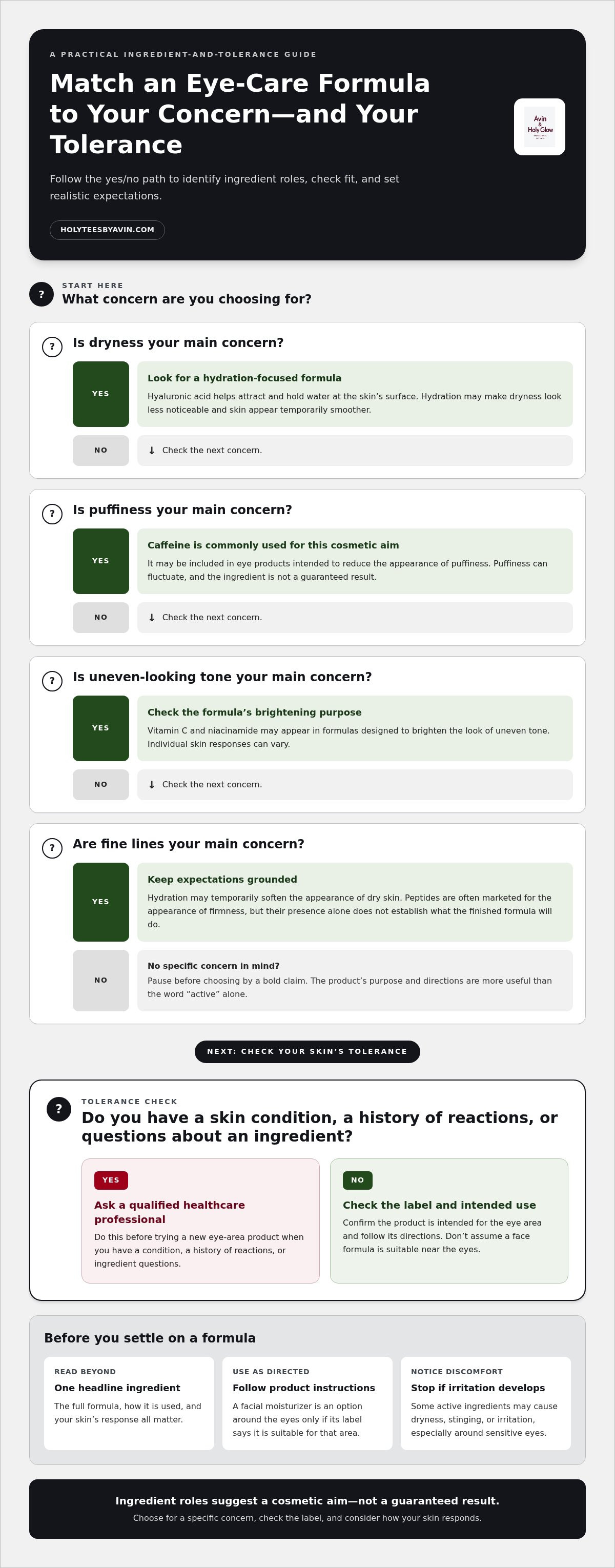
Hyaluronic acid is a humectant, meaning it helps attract and hold water in the skin’s surface. In an eye-area product, that hydration may make dryness look less noticeable and skin appear temporarily smoother. A hyaluronic acid serum guide can offer more context on this ingredient’s general role in skincare.
Peptides are used in skincare formulations, often in products marketed for the appearance of firmness. Their presence alone doesn’t establish what a finished formula will do. The type and amount of peptide, the surrounding ingredients, and the complete formulation all matter. Caffeine is also commonly included in eye products intended to reduce the appearance of puffiness, while vitamin C and niacinamide may appear in formulas designed to brighten the look of uneven tone. Treat these as cosmetic aims, not guaranteed outcomes.
Retinoids and brightening ingredients: consider tolerance
Retinoids and other active ingredients differ in form and strength. Some people may experience dryness, stinging, or irritation, and the eye area can be especially sensitive. Brightening ingredients also vary in how they’re formulated and how individual skin responds. An ingredient list can tell you what’s included, but it can’t predict your personal reaction with certainty.
If you have a skin condition, a history of reactions, or questions about an ingredient, ask a qualified healthcare professional before trying a new eye-area product. Check the product label for its intended use and directions, and don’t assume that a formula designed for the face is suitable near the eyes.
Choose ingredients to match both your concern and your tolerance. The most suitable formula is one you can use as directed without unwanted irritation. Avin & Holy Glow offers a Men’s Under Eye Cream. Check its current listing for verified ingredients, intended users, and directions before deciding whether it fits your needs.
Active Eye Cream Myths: Results, Sensitivity, and Product Claims
A persuasive label can make an eye product sound like a certain fix. But skin differs, concerns have different contributing factors, and formulas don’t affect everyone in the same way. Hydration may temporarily make dry skin look smoother or less noticeable. Claims of lasting changes to dark circles, puffiness, or wrinkles deserve more scrutiny than a basic moisturizing claim.
A product claim describes what a formula is intended to do; it can’t guarantee an individual result. Be especially thoughtful about promises to erase a concern completely or deliver the same visible change for every user.
- Potential benefit: A dedicated product may add hydration or fit comfortably into your routine.
- Potential drawback: It adds another formula to assess, and some ingredients may cause discomfort or irritation.
- Practical takeaway: Consider whether the product addresses a concern you have, rather than buying it based on dramatic wording.
Can eye cream remove dark circles or puffiness?
Not reliably for everyone. Dark circles and puffiness can have different contributing factors, and some may not respond to topical skincare. A moisturizing formula might soften the look of dryness, but that’s not the same as removing dark circles or bags. Don’t treat a cosmetic promise as a diagnosis or a cure.
If a change is sudden, persistent, or concerning, seek advice from a qualified healthcare professional instead of relying on a cream. That’s particularly important if the change comes with other symptoms.
How to assess claims and reduce irritation risk
Before trying a product, read beyond the headline claim. Review the full ingredient list, directions, warnings, and intended-use information. Check whether it’s specifically meant for the eye area, and follow the label rather than assuming facial products are suitable nearby.
Make changes thoughtfully. Introduce an unfamiliar formula cautiously, and avoid starting several new active products at once. This makes it easier to notice which product may be contributing to a reaction. If discomfort or irritation develops, stop using the product. If symptoms persist or you’re unsure what to try next, ask a qualified professional.
How to Choose and Use an Active Eye Cream Thoughtfully
A clear process can make choosing an active eye cream less overwhelming. Start with one concern, check whether the product is intended for the eye area, and pay attention to how your skin tolerates it. A longer ingredient list or stronger-sounding claim isn’t automatically a better fit.
- Identify one concern. Decide whether you’re mainly looking to address the appearance of dryness, puffiness, uneven tone, or fine lines. This gives you a practical basis for comparing products.
- Inspect the label. Review the full ingredient list, intended use, warnings, and directions. Look for information relevant to your concern, and don’t assume an ingredient guarantees a result.
- Assess your tolerance. Introduce the product cautiously and avoid adding several unfamiliar active products at once. Stop using it if irritation develops.
Directions vary by formula, so follow the product label rather than assuming there’s a universal application schedule or amount. Apply carefully to the area indicated, and avoid direct contact with your eyes. If a product gets into your eyes, follow its label guidance.
A simple eye skincare routine for beginners
Keep the routine simple while introducing an eye-area product. Begin with cleansing, then apply other products in the order and amount their labels direct. For broader context on combining serums, see the vegan serum guide. Avoid layering products close to the eyes unless their directions allow it.
When should you pause or seek professional advice?
Don’t apply an eye product to broken or uncomfortable skin. Pause use if irritation develops, and seek professional guidance if symptoms persist or you have questions about an existing skin condition. Individual tolerance matters more than adding extra active ingredients to your routine.
For a product-specific decision, check the current listing for its intended users, ingredients, and directions. Explore skincare options from Holy Tees by Avin and review the product details before deciding whether one suits your routine.
Finding an Eye-Care Product That Fits Your Values and Routine
A good choice should make sense for your skin and your standards. Before selecting an active eye cream, look past broad marketing language and check what the product is intended for, what its label says, and whether it fits your routine.
What to check before choosing an eye-area product
- Intended user and use: Check who the product is designed for and whether its directions specifically include the eye area. Consider whether that matches your preferences and concerns.
- Concern and ingredients: Review the ingredient list in relation to the cosmetic concern you want to address. An ingredient name alone can’t tell you how the finished formula will perform.
- Directions and warnings: Read how the product should be applied and any cautions on the label. Follow those directions rather than borrowing a routine from another formula.
- Tolerance and values: Consider how your skin responds, and verify claims such as vegan, cruelty-free, fragrance-free, or suitable for sensitive skin on the current product listing.
Vegan and cruelty-free describe different considerations. Vegan generally refers to a product made without animal-derived ingredients, while cruelty-free relates to animal testing. Don’t assume one claim means the other. Check how the product listing describes each, along with any fragrance or sensitivity claims that matter to you.
Keep the decision personal. A product that fits your values but doesn’t suit its intended use or your tolerance may not be right for your routine. Clear product details help you make an informed choice without treating every marketing phrase as a promise.
Explore Holy Tees by Avin’s eye-care offering
Holy Tees by Avin offers a Men’s Under Eye Cream as part of its beauty range. The category name alone doesn’t confirm its ingredients, benefits, directions, or whether it’s suitable for your needs, so review the current product listing before making a decision.
Once you’ve checked the details that matter to you, explore Holy Tees by Avin and its beauty range as you consider what fits your routine.
Choose Eye Care with Clarity and Confidence
The right active eye cream isn’t necessarily the one with the boldest promise. Match a product to the concern you want to address, check its ingredients and directions, and pay attention to how your skin responds. Hydration may soften the appearance of dryness, but no cream can guarantee the same results for everyone.
Keep your routine thoughtful and simple. Follow the product label, introduce unfamiliar formulas cautiously, and pause if irritation develops. Vegan and cruelty-free are separate claims, so verify each one if it matters to your choices.
Holy Tees by Avin lists a Men’s Under Eye Cream and offers a broader range of beauty and skincare products. Review current product details before deciding whether an item suits your needs, then explore Holy Tees by Avin’s beauty range.
Informed choices make eye care feel more manageable. Start with what your skin needs, and build a routine that feels right for you.
Frequently Asked Questions
What does active eye cream do?
An active eye cream is made for the eye area and contains ingredients intended to address cosmetic concerns such as dryness, puffiness, uneven-looking tone, or fine lines. Its effect depends on the full formula, directions, and your skin’s response. For example, a hydrating formula may temporarily make dry skin appear smoother. No ingredient or product can guarantee the same result for every person.
Is active eye cream necessary?
No, a separate eye cream isn’t essential for everyone. Some people use a facial moisturizer around the eyes if its label allows, while others prefer a dedicated product’s texture or application style. Consider whether you have a specific concern and whether the product fits your routine. Check its intended use and directions, and don’t add a step simply because it’s marketed as a must-have.
Can eye cream get rid of dark circles?
Eye cream can’t reliably get rid of dark circles for everyone. Their appearance may have different contributing factors, and some may not respond to topical products. A formula that hydrates could make dryness look less noticeable, but that isn’t the same as eliminating dark circles. If a change is sudden, persistent, or concerning, seek advice from a qualified healthcare professional rather than relying on a cosmetic product.
How do you apply active eye cream?
Apply it only as directed on the product label. Start with clean skin if the directions call for it, use the amount specified, and place the product carefully on the intended eye-area skin. Avoid direct contact with your eyes and don’t apply it to broken or uncomfortable skin. Products differ, so don’t assume a particular amount, placement, or schedule applies to every formula.
Can I use active eye cream every day?
That depends on the product and your skin’s tolerance. Some formulas may be intended for daily use, while others may have different directions. Read the label and follow its recommended frequency rather than adopting a schedule from another product. If you notice irritation or discomfort, stop using it. Ask a qualified healthcare professional for guidance if you’re unsure whether it suits your skin or an existing concern.
Should I use eye cream before or after moisturizer?
Follow the directions on both products, since formulas and application instructions vary. In a routine that allows layering, you might apply an eye product after cleansing and before a facial moisturizer, but don’t assume that order suits every formula. Check whether your moisturizer is labeled for use around the eyes. If either product’s directions advise against layering or eye-area use, follow those instructions.
What should I look for in an active eye cream?
Start with your main concern, then check the product’s intended user, full ingredient list, directions, warnings, and intended area of use. Consider whether the formula fits your preferences and whether your skin has tolerated similar ingredients. Look beyond broad marketing claims, and verify product-specific statements such as vegan, cruelty-free, fragrance-free, or sensitivity claims on the current listing.
Can active eye cream irritate sensitive skin?
Yes. Some ingredients or formulas can cause irritation, and individual responses vary. Read the full ingredient list, directions, and warnings before use, especially if you’ve reacted to skincare products before. Introduce an unfamiliar product cautiously rather than starting several new active formulas together. Stop using it if discomfort or irritation develops. For persistent symptoms, an existing skin condition, or uncertainty about ingredients, consult a qualified professional.

Article by
Avin
Avin is the founder and visionary behind Holy Tees by Avin, a Black woman-owned Brooklyn brand that uniquely bridges the worlds of expressive streetwear and ethical beauty. Driven by a mission to offer premium style without compromising on values, Avin curated a collection that features quality activewear, hoodies, and graphic tees paired alongside a dedicated line of vegan and cruelty-free cosmetics. Through her platform, she champions mindful living, creating high-performance skincare and beauty products that celebrate clean ingredients and sacred self-care.