
A lipstick can be cruelty-free and still contain beeswax, but it cannot be vegan. That distinction matters when you want comfortable color and ingredients that reflect your values. In a beeswax lipstick, the wax can help give the formula structure, but it does not guarantee lasting hydration or the same feel for every wearer.
Choosing lipstick means weighing more than shade. The wax, finish, feel, and meaning behind labels such as “vegan” and “cruelty-free” all matter. This guide explains what beeswax can contribute, how it compares with plant-derived waxes, and why vegan and cruelty-free describe different things.
You’ll also find practical points to consider when choosing and wearing beeswax-based lipstick, from ingredient preferences to finish and everyday feel. Avin & Holy Glow offers beeswax-based lipsticks alongside vegan makeup, so you can compare options with different ingredient profiles.
Key Takeaways
- Compare complete ingredient lists. Waxes help shape a lipstick’s structure, while the rest of the formula influences its feel and finish.
- Beeswax is animal-derived, so beeswax lipstick is not vegan. Consider vegan and cruelty-free claims separately.
- Choose shades with your natural lip color in mind, since the result can vary between products and wearers.
- Match the finish to how you plan to wear the lipstick. Don’t assume every formula feels or wears the same way.
- Prepare your lips, apply color in controlled layers, and refine the edges. Comfort and wear depend on the formula and how you use it.
What Is Beeswax Lipstick and Its Role in Formulas?
Beeswax lipstick is lipstick made with beeswax as one of its ingredients. Produced by honeybees, beeswax is used in cosmetics, including lip products. You can read more about its origins and uses in this overview of Beeswax. Because it comes from an animal, lipstick containing beeswax is not vegan.
That ingredient tells you something about the formula, but not exactly how the finished lipstick will feel or wear. Beeswax-based lipsticks may suit people who are comfortable using an animal-derived wax. The complete ingredient list and your own experience matter, too.
A homemade lipstick video can illustrate how beeswax may be used as one part of a lip color formula:
What role can beeswax play in lipstick?
Beeswax can contribute structure and texture, helping lipstick hold its shape. It is not the only ingredient that affects glide, comfort, color payoff, or wear. Other ingredients also shape the result, so two lipsticks containing beeswax can perform differently. Treat the ingredient list as a guide, not a guarantee of how a product will feel on your lips.
How is lipstick different from lip balm?
Lipstick is generally chosen to add color and create a particular finish. Lip balm is commonly used as part of a lip-care routine. The categories can overlap: some products offer color and are used like a balm. Labels alone do not reveal the full formula, and neither category has one universal ingredient list.
Compare each product’s stated purpose, finish, and full ingredients. If you prioritize vegan makeup, look for a formula without beeswax or other animal-derived ingredients. If you are comfortable with beeswax, assess the complete product rather than assuming the wax alone determines hydration or wear. The formula may suit your preferences, but individual comfort and results can vary.
How Beeswax Lipstick Formulas Differ: Waxes, Oils, and Ingredient Labels
Wax can help give lipstick its shape, but it does not tell you everything about the formula. Waxes contribute structure, while oils, pigments, and other ingredients can influence application, feel, and appearance. The complete formula matters more than any one featured ingredient. Compare ingredient lists instead of assuming that lipsticks with the same wax will perform alike.
How to read a beeswax lipstick ingredient list
Look for “beeswax” or its cosmetic ingredient name, Cera alba, to identify beeswax in a formula. Then read the rest of the list. Ingredient order can provide context, but it cannot tell you exactly how comfortable, moisturizing, or long-wearing a lipstick will be for you.
Compare labels according to your own priorities. If you prefer a particular type of wax, look for it by name. If feel or finish is your main concern, remember that the complete combination of ingredients shapes the result. An ingredient list cannot guarantee your individual experience.
Beeswax and plant-derived waxes: what is the difference?
Beeswax is animal-derived. Carnauba and candelilla are examples of plant-derived waxes used in cosmetics. This distinction can help guide your choice, especially if you are looking for vegan makeup, but it does not make one wax automatically better or more suitable for everyone. Your preferences and the finished formula both matter.
For broader context, the Cosmetic Ingredient Review’s assessment describes beeswax as safe for use in cosmetics. That general ingredient assessment does not predict how a particular lipstick will feel or perform, or determine whether it meets your personal ingredient standards.
As you compare beeswax lipstick formulas, consider three factors: whether the wax fits your ingredient preferences, what the complete list tells you about the formula, and whether the stated finish matches the look you want. Holy Tees by Avin offers beeswax-based lipsticks for shoppers who are comfortable choosing an animal-derived wax.
Is Beeswax Lipstick Vegan or Cruelty-Free? Know the Difference
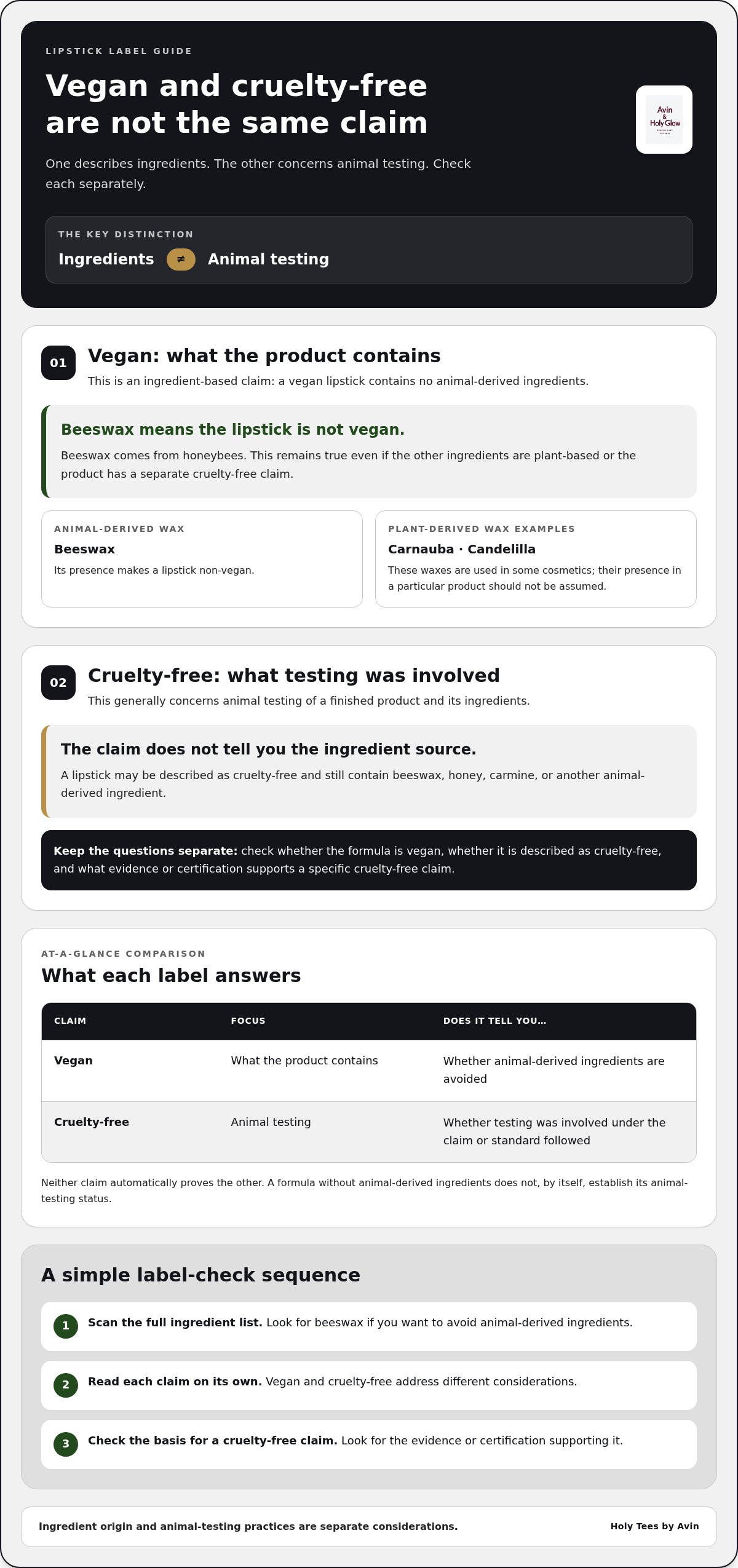
Ingredient origin and animal-testing practices are separate considerations. A lipstick may meet one ethical preference without meeting another, so read each claim carefully. Vegan describes what a product contains; cruelty-free describes whether animal testing was involved. The terms are not interchangeable, and one label alone does not answer both questions.
Can beeswax lipstick be vegan?
No. Beeswax is animal-derived, so a lipstick containing it is not vegan. That remains true even if the other ingredients are plant-based or the product carries a separate cruelty-free claim. If avoiding animal-derived ingredients is important to you, look for a lipstick made without beeswax and review its full ingredient list.
Plant-derived waxes, such as carnauba or candelilla, are used in some cosmetics. Their presence should not be assumed in a particular product, and a plant-based ingredient does not establish a product’s animal-testing status. Choose according to your own priorities.
What does cruelty-free mean for a lipstick shopper?
Cruelty-free generally concerns animal testing of a finished product and its ingredients. It does not tell you whether the formula contains beeswax, honey, carmine, or another animal-derived ingredient. A lipstick could therefore be described as cruelty-free under the claim or standard it follows and still not be vegan. Likewise, a formula without animal-derived ingredients does not, by itself, tell you whether animal testing was involved.
Consider each claim separately. Check whether the product is described as vegan, cruelty-free, or both, and look at what evidence or certification supports a specific cruelty-free claim. Do not infer a product’s testing process or certification from its ingredients, and do not assume “cruelty-free” means animal-free.
Holy Tees by Avin offers beeswax-based lipsticks alongside vegan makeup and cruelty-free cosmetics. These represent distinct considerations, so weigh the ingredient choice and the testing claim separately. For more context on these lip products, read the guide to vegan lip gloss and beeswax lipsticks.
How to Choose Beeswax Lipstick for Your Shade, Skin Type, and Desired Finish
Choose based on more than the color in the tube. First decide whether beeswax fits your ingredient preferences, then compare shades, finishes, and the occasions when you plan to wear the lipstick. Your skin type and personal comfort matter, too. No single formula or finish suits everyone.
A shade can look different on your lips than it does in packaging or a product image. Your natural lip color, the formula, and how much product you apply can all affect the result. When comparing swatches, consider the lighting and whether you want subtle everyday color or a more noticeable look.
Which lipstick finish and shade suit your preferences?
Start with the look you want and the clothes you plan to wear. Matte finishes generally have less shine, while cream finishes often look smoother or more lustrous. These are broad descriptions, not guarantees of how a specific formula will apply or feel. For a closer comparison, read this guide to long-lasting matte lipstick.
Lip liner can help define your lip shape and coordinate with lipstick. Explore the guidance on beeswax lip liner to learn more about pairing definition with lip color. Consider whether the shade complements your wardrobe and suits the occasion, rather than choosing by trend alone.
What should sensitive-lip shoppers consider?
Read the full ingredient list and take your own sensitivities into account. “Natural” does not automatically mean suitable for everyone, and an ingredient’s origin alone cannot predict personal comfort. If you already know that certain ingredients do not work for you, use that knowledge to guide your choice. For broader context, see this overview of natural cosmetics and ingredient choices.
Beeswax lipstick may be an option if its ingredients, shade, and finish align with your preferences. Explore beeswax-based lipsticks from Holy Tees by Avin as you compare products for your routine.
How to Apply Beeswax Lipstick and Make It Part of an Intentional Routine
A simple application can help you achieve the look you want. Prepare your lips, apply color with control, then adjust the edges and intensity to suit your style. Comfort and wear vary by formula and individual use. Beeswax alone cannot predict how a lipstick will feel or how long it will last on your lips.
What is a simple way to apply beeswax lipstick?
Begin with clean lips that feel comfortable. If there is excess product or moisture on the surface, gently blot before applying color. Then follow these steps:
- Apply evenly. Start near the center of your lips and move outward, following their natural shape.
- Build gradually. Add color in light passes until you reach the depth you prefer. A softer look may take less product, while a more defined color may call for another pass.
- Refine the edges. Check the outline in a mirror and smooth uneven areas with the lipstick or a lip liner that suits your look.
- Adjust as needed. Blot lightly if you want to remove excess product, and reapply during the day according to your preference.
These steps do not promise a particular finish, transfer resistance, or wear time. Let your experience guide how much you apply and whether you want to refresh the color.
How can beeswax lipstick fit your mindful beauty choices?
Let your ingredient priorities lead. Beeswax is animal-derived, so a lipstick containing it is not vegan. If you choose vegan makeup, select a lipstick without animal-derived ingredients. If you are comfortable with beeswax, weigh that preference alongside the shade, finish, and feel you want.
Holy Tees by Avin offers beeswax-based lipsticks as well as vegan makeup. Each option represents a different ingredient choice, so read the product information with your values and personal style in mind. Your routine can be as subtle or defined as you like.
Explore Holy Tees by Avin for beauty choices made with intention, including beeswax-based lipstick options.
Choose Lip Color That Reflects Your Priorities
Beeswax can contribute structure and texture to lipstick, but the complete formula shapes how it feels and wears. A beeswax lipstick contains an animal-derived ingredient, so it is not vegan. Cruelty-free is a separate consideration about animal testing, not whether a product contains animal-derived ingredients.
Review the ingredients first, then consider the shade, finish, occasion, and personal comfort you want. Color may look different depending on the formula and your natural lip color, and wear can vary. A considered choice is one that suits both your style and ingredient preferences.
Holy Tees by Avin offers beeswax-based lipsticks alongside vegan cosmetics and cruelty-free makeup. Explore beeswax-based lipstick and choose with intention. Let your next lip color reflect what matters to you.
Frequently Asked Questions
Is beeswax lipstick vegan?
No. Beeswax is animal-derived, so a lipstick containing it is not vegan, even if its other ingredients are plant-based. If avoiding animal-derived ingredients matters to you, review the full ingredient list and look for a formula without beeswax. Plant-derived waxes are used in some cosmetics, but check a product’s ingredients rather than assuming it contains them. Choose according to your preferences.
What does beeswax do in lipstick?
Beeswax can contribute structure and texture, helping lipstick hold its shape. It is not the only ingredient that affects application or feel. Oils, pigments, and other components also influence the finished product, so two lipsticks containing beeswax can feel or wear differently. Beeswax alone cannot guarantee lasting hydration, comfort, or a particular finish.
Is beeswax lipstick cruelty-free?
Not necessarily. Cruelty-free describes animal-testing considerations, while beeswax describes an ingredient’s animal origin. A product containing beeswax may be described as cruelty-free under a particular claim or standard, but the ingredient itself does not tell you whether animal testing was involved. Look for information about the finished product and its testing practices. Vegan and cruelty-free are not interchangeable labels.
How can I identify beeswax in a lipstick ingredient list?
Look for “beeswax” or the ingredient-list name “Cera alba.” Read the complete list rather than drawing conclusions from one ingredient. Ingredient order can provide context, but it does not reveal exactly how a formula will feel or perform on your lips. If you are avoiding animal-derived ingredients, check for beeswax and review the rest of the formula, too.
Can beeswax lipstick be suitable for sensitive lips?
It may suit some people, but no ingredient or lipstick can be assumed to work for everyone with sensitive lips. Review the full ingredient list and consider any ingredients you already prefer to avoid. “Natural” does not automatically mean suitable for you. If a product causes discomfort, stop using it. Personal experience can differ, so choose based on your own needs.
How do you apply beeswax lipstick?
Start with clean lips that feel comfortable, then apply color evenly, moving from the center outward. Build it gradually until you reach the intensity you want. Check the outline in a mirror and refine uneven edges with the lipstick or a lip liner. Blot lightly or reapply as you prefer. Comfort and wear vary by formula and individual use.
What is the difference between beeswax lipstick and lip balm?
Lipstick is generally used to add color and create a chosen finish, while lip balm is commonly part of a lip-care routine. The categories can overlap: some products offer color and may also be used like a balm. Neither category has one universal ingredient list, so read the product information to understand its ingredients and intended use rather than assuming all lipsticks or balms are alike.

Article by
Avin
Avin is the founder and visionary behind Holy Tees by Avin, a Black woman-owned Brooklyn brand that uniquely bridges the worlds of expressive streetwear and ethical beauty. Driven by a mission to offer premium style without compromising on values, Avin curated a collection that features quality activewear, hoodies, and graphic tees paired alongside a dedicated line of vegan and cruelty-free cosmetics. Through her platform, she champions mindful living, creating high-performance skincare and beauty products that celebrate clean ingredients and sacred self-care.