
When researching Plant-based vegan Face Cleanser Skin care, remember that the words “plant-based” and “vegan” tell you less about how a cleanser will feel on your skin than you might expect. These labels can reflect important values, but they don’t automatically show whether a formula suits your skin or leaves it comfortable after washing. A confident choice starts with both the product details and how your skin responds.
You don’t have to guess your way through ingredient lists or settle for a tight, uncomfortable feel. This guide explains what plant-based and vegan labels can indicate, what to check when comparing ingredients and textures, and how to choose a face cleanser around your own needs and preferences.
It also covers a thoughtful way to introduce a new cleanser without changing your whole routine. Holy Tees by Avin offers a Kale Facial Cleanser, one option to consider as you compare products. Let your values guide your search, then use your skin’s comfort as part of your decision.
Key Takeaways
- Distinguish what “plant-based” suggests from what “vegan” claims by checking the ingredient list for animal-derived ingredients.
- Use post-wash comfort as a personal observation, not as a diagnosis of your skin barrier.
- Compare cleanser format, full ingredients, directions, and product-specific claims with your skin needs and preferences.
- For Plant-based vegan Face Cleanser Skin care, look beyond labels and check the formula details that matter to your values and routine.
- Before choosing Holy Tees by Avin’s Kale Facial Cleanser or Hydrating Facial Cleanser, review the current ingredients, directions, and cleanser-specific vegan claims.
Plant-based vegan Face Cleanser Skin care: What Do the Labels Mean?
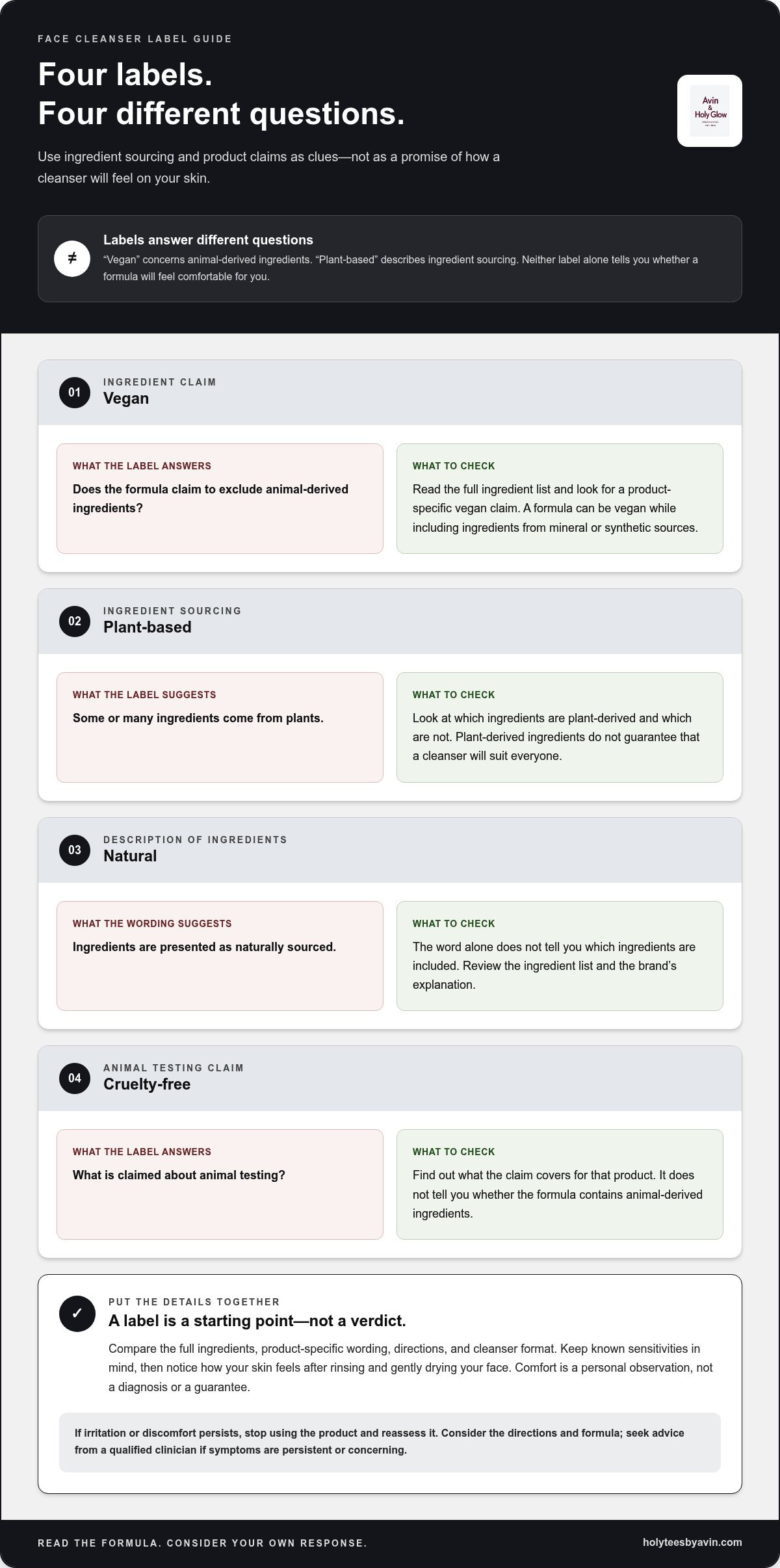
A plant-based face cleanser highlights ingredients sourced from plants. A vegan cleanser is formulated without animal-derived ingredients or by-products. These descriptions overlap, but they answer different questions. A product may be vegan without every ingredient being plant-derived, since ingredients can also come from mineral or synthetic sources. A cleanser is one kind of cosmetic used to cleanse the skin, as described in Cosmetics.
In short, “vegan” addresses animal-derived ingredients, while “plant-based” describes ingredient sourcing. Neither label alone tells you whether a cleanser will feel comfortable on your skin. For Plant-based vegan Face Cleanser Skin care, read the product details, not just the front label.
For a visual overview of vegan skincare products, watch this video:
What does vegan mean in face cleanser?
A vegan claim concerns a formula’s ingredients, not how gentle the cleanser is or how it will feel after washing. Check the full ingredient list and look for a product-specific vegan claim rather than assuming a brand-wide description applies to every item. If the label leaves you uncertain, consult the product information or ask the brand for clarification.
How is plant-based different from natural or cruelty-free?
These terms address different shopper questions. “Plant-based” refers to ingredient sourcing. “Natural” suggests ingredients described as naturally sourced, but the word alone doesn’t tell you which ones. “Cruelty-free” concerns animal testing, not whether a formula contains animal-derived ingredients. Because claims can have different scopes, check the product’s own explanation.
Plant-derived doesn’t automatically mean suitable for everyone. People can react to ingredients from botanical sources, so consider your own sensitivities and how the cleanser feels in use.
| Label | What it may indicate | What to check |
|---|---|---|
| Vegan | No animal-derived ingredients are claimed. | Full ingredients and product-specific wording. |
| Plant-based | Some or many ingredients come from plants. | Which ingredients are plant-derived and which are not. |
| Natural | Ingredients are presented as naturally sourced. | The ingredient list and the brand’s explanation. |
| Cruelty-free | A claim about animal testing. | What the claim covers for this product. |
Use labels as a starting point, not a verdict. Pair them with ingredient details and your own preferences to make a more informed cleanser choice.
How Plant-Based Cleanser Choices Relate to the Skin Barrier
Your skin barrier is the outer layer that helps keep moisture in and everyday irritants out. Think of it as a protective surface, not a scorecard for judging whether your skin is healthy. Cleansing is one part of a routine, and a product’s label can’t tell you exactly how your skin will respond. Vegan or plant-based claims describe a product, not your individual tolerance of it.
That’s why Plant-based vegan Face Cleanser Skin care involves more than ingredient sourcing. A formula can align with your preferences and still not feel right for you. Review the full ingredient list, keep known sensitivities in mind, and notice how your skin feels after use rather than expecting a particular result based on a label.
What does a comfortable cleanse feel like?
Notice how your skin feels after you’ve rinsed and gently dried your face. Does it feel comfortable, or do you notice tightness, stinging, or other discomfort? This is a personal observation, not a medical assessment of your skin barrier. No single post-wash sensation proves that a cleanser is right or wrong for everyone.
If irritation or discomfort persists, stop using the product and reassess it rather than pushing through. Consider the directions and formula, and seek advice from a qualified clinician if symptoms are persistent or concerning.
Does plant-derived always mean gentle?
No. The source of an ingredient can’t guarantee how an individual will respond. A botanical ingredient may suit one person and bother another, just as a vegan or plant-based label doesn’t establish that a cleanser is gentle. Review the whole formula, including ingredients you already know you’re sensitive to, and follow the cleanser’s directions.
Skin comfort can help you make a more informed personal choice, but it isn’t a diagnosis or a promise about dryness, sensitivity, acne, or any other concern. If you’re managing ongoing skin symptoms, a qualified clinician can help you assess them.
For general context on information presented on cosmetic labels, consult the FDA’s Cosmetics Labeling Guide. Use product-specific details to understand a cleanser, and your own response to decide whether it feels like a suitable fit.
If you’re comparing cleanser options, you can review Holy Tees by Avin facial cleansers and check the current formula and directions for each.
How to Compare Vegan Face Cleansers by Ingredients and Skin Type
A label can tell you something about a cleanser, but it can’t tell the whole story. Compare the product’s format, ingredient list, directions, and specific claims, then weigh those details against your preferences and known sensitivities. This gives you a more useful way to assess Plant-based vegan Face Cleanser Skin care than choosing by one highlighted ingredient or appealing label alone.
Which cleanser details should you check on the label?
Use this checklist to compare products consistently:
- Format and texture: Note whether the cleanser is a gel, cream, foam, or another format. Consider which texture you enjoy using and how it feels during rinsing.
- Full ingredient list: Read the complete list, not just the featured ingredients on the front. If a name is unfamiliar, look it up or ask the brand what it refers to rather than assuming it’s beneficial or concerning.
- Directions: Check how the cleanser is intended to be applied and rinsed. Follow the product’s own instructions instead of assuming all cleansers are used the same way.
- Product-specific claims: Look for claims on the cleanser itself. Verify whether vegan or cruelty-free language applies to that product, and check claims such as paraben-free or fragrance-free rather than inferring them from other products in a brand’s range.
Assess the complete formula, not a cleanser by one ingredient. An ingredient’s presence doesn’t prove how the finished product will perform or feel on your skin. Formula details and directions matter together.
How can skin type guide a cleanser comparison?
Skin-type descriptions can help narrow what to explore, but they don’t guarantee compatibility. Consider how your skin usually feels, any ingredients you already know you’re sensitive to, and the post-cleanse feel you prefer. If two cleansers seem relevant, compare their directions and full ingredient lists before deciding which one to try.
Texture is personal, too. One person may prefer a lighter-feeling format, while another may like a creamier texture. Neither preference is a rule for a particular skin type. Choose based on the product instructions and your own comfort, then reassess if the cleanser doesn’t feel like a good fit.
For a practical comparison, review the current product information for each cleanser you’re considering. If you’re comparing Holy Tees by Avin’s facial cleansers, check each product’s ingredient list, directions, and specific claims. Don’t assume the products share the same formula or attributes. Use the details available to decide whether either fits your preferences.
How to Use and Introduce a Plant-Based Face Cleanser
A cleanser’s place in your routine depends on its own directions and the products you already use. Before adding it, check whether the label describes a particular application or rinsing method, then consider how it fits around your leave-on skincare. Keeping the rest of your routine steady as you make a change can make it easier to notice what feels different, without assuming every cleanser belongs in the same routine.
What is a sensible first-use routine?
Start by reading the product directions, including how to apply and remove the cleanser and how often it is intended to be used. Follow those instructions rather than borrowing a routine from another product. If you’re changing your skincare routine, avoid adding several unfamiliar items at once. A simple note of what you introduced and how your skin feels can help you keep track without making routine care complicated.
If you notice a reaction, stop using the cleanser and reassess the product information. Seek advice from a qualified clinician if symptoms are concerning or persist. Personal observations can help you decide what to ask, but they aren’t a diagnosis.
Where does cleanser fit with serum and moisturizer?
In a general skincare sequence, cleanser is used before leave-on products such as serum and moisturizer. Apply each item according to its own label, since instructions can differ between products. Don’t assume a cleanser contains a serum ingredient or takes the place of another step. If you’re adding a serum, consider the hyaluronic acid serum benefits as a separate skincare topic, and check the directions for the serum you own.
Keep the rest of your routine familiar while you learn how a new cleanser fits. That gives you a clearer basis for deciding whether its texture, directions, and place in your routine work for you.
Holy Tees by Avin lists a Kale Facial Cleanser and a Hydrating Facial Cleanser. Review the current product information to compare their formulas, directions, and product-specific claims. Explore Holy Tees by Avin facial cleansers and consider which details best match your preferences.
Choosing a Holy Tees by Avin Cleanser with Confidence
Avin & Holy Glow lists a Kale Facial Cleanser and a Hydrating Facial Cleanser. Their names identify options to compare, but don’t establish what’s in either formula, how to use it, or which product claims apply. Make your choice using current, product-specific information rather than assumptions based on a cleanser’s name or the brand’s wider skincare range.
What can shoppers verify about the cleanser?
Before choosing, review each cleanser’s current product page. Look for the full ingredient list, directions, availability, and claims made specifically about that cleanser. If you’re looking for a vegan face cleanser, confirm that the vegan claim applies to the exact product you’re considering. Don’t assume a brand-level description confirms every product’s status.
Keep product facts separate from general skincare education. Plant-derived ingredients are often discussed in relation to skincare, but that doesn’t confirm that a particular cleanser contains them or establish how its formula will feel or perform. Don’t attribute kale, aloe, hyaluronic acid, oils, or fragrance characteristics to either cleanser without confirmation in its current product information.
Avin & Holy Glow is described as a Black woman-owned small business. That’s meaningful brand context for shoppers who want to consider who’s behind a business, but it isn’t evidence of a cleanser’s ingredients or performance. In Plant-based vegan Face Cleanser Skin care, values and formula details can both matter, and each deserves its own careful check.
What is a practical next step before choosing?
Compare the two listings against your own preferences. Check the ingredients for anything you know you’re sensitive to, consider the stated directions, and decide whether the product claims match what you’re seeking. If important details are missing or unclear, ask the brand before choosing rather than filling in the gaps yourself.
That review helps you shop with confidence without expecting a product name or general plant-based messaging to answer every question. You’ll know what has been confirmed and what still needs clarification.
Ready to review the current cleanser details? Explore Avin & Holy Glow and compare the Kale Facial Cleanser and Hydrating Facial Cleanser using the information listed for each.
Choose Your Next Cleanser with Confidence
A thoughtful cleanser choice brings your values and your skin’s needs into the same routine. Vegan and plant-based describe different aspects of a formula, and neither label predicts how it will feel on your skin. Check the full ingredient list, product-specific claims, and directions, then notice your own comfort as you use it.
That’s the practical heart of Plant-based vegan Face Cleanser Skin care: look beyond a label, introduce a new product thoughtfully, and let your preferences guide the decision. Holy Tees by Avin is described as a Black woman-owned small business and lists both a Kale Facial Cleanser and a Hydrating Facial Cleanser. Their names alone don’t confirm ingredients or product claims, so review the current details for each before choosing.
Ready to explore the brand’s cleanser options? Explore Holy Tees by Avin skincare and compare the product information with what matters to you. A clear, considered choice is a strong place to begin. Keep your routine simple as you find what feels right.
Frequently Asked Questions
What is a plant-based vegan face cleanser?
A plant-based vegan face cleanser is described with two distinct ingredient claims: “plant-based” points to plant sourcing, while “vegan” means the formula is claimed to contain no animal-derived ingredients. The terms don’t confirm that every ingredient comes from plants, that the cleanser is gentle, or that it will suit your skin. Check the complete ingredient list and verify that any claim applies to the specific product.
Is a plant-based vegan face cleanser suitable for sensitive skin?
Not necessarily. Plant-derived ingredients can still be unsuitable for some people, and a vegan claim doesn’t predict how your skin will respond. Review the full formula, consider ingredients you already know you’re sensitive to, and follow the cleanser’s directions. If you experience persistent irritation or have a diagnosed skin condition, ask a qualified clinician for guidance instead of relying on a marketing label to determine what’s right for you.
Can a vegan face cleanser be cruelty-free?
Yes, a cleanser can make both claims, but one doesn’t automatically establish the other. Vegan refers to the ingredients, while cruelty-free refers to animal testing practices. Check whether both claims are made for the specific cleanser and look for clear supporting information from the brand. Don’t assume a product has a third-party certification unless that certification is identified and confirmed for the product.
How do I choose a vegan face cleanser for my skin type?
Start with your own skin needs, known sensitivities, and preferred cleanser texture. Then compare the full ingredient list, directions, and product-specific claims that matter to you, such as vegan or fragrance-free. Skin-type descriptions can help narrow your options, but they can’t guarantee a match. For Plant-based vegan Face Cleanser Skin care, introduce one new product thoughtfully and stop using it if you experience a concerning reaction.
Does plant-based mean a face cleanser is natural or chemical-free?
No. Plant-based describes ingredient sourcing, while “natural” is a separate, broad marketing term. “Chemical-free” isn’t a useful way to describe a cleanser, since water and plant-derived ingredients are chemicals too. Rather than relying on broad labels, read the complete formula and directions, and check the specific claims the brand makes. A natural-sounding label alone doesn’t prove a product is safer or more effective for you.
How often should I use a plant-based face cleanser?
Follow the directions for the particular cleanser you choose. Products can have different formulas and intended uses, so don’t assume they’re all meant for the same frequency or application method. Pay attention to how your skin feels, and avoid introducing several unfamiliar skincare products at once so you can better notice a response. If cleansing leads to persistent discomfort, stop using the product and seek appropriate professional guidance.
Can I use a face cleanser before serum and moisturizer?
Generally, cleansing comes before leave-on skincare such as serum or moisturizer. Use and rinse or remove the cleanser as its label directs, then follow the instructions for each product you apply afterward. Don’t assume a cleanser contains a particular active ingredient or replaces other skincare steps. If you’re trying several unfamiliar products, introduce them one at a time so it’s easier to notice how your skin responds.

Article by
Avin
Avin is the founder and visionary behind Holy Tees by Avin, a Black woman-owned Brooklyn brand that uniquely bridges the worlds of expressive streetwear and ethical beauty. Driven by a mission to offer premium style without compromising on values, Avin curated a collection that features quality activewear, hoodies, and graphic tees paired alongside a dedicated line of vegan and cruelty-free cosmetics. Through her platform, she champions mindful living, creating high-performance skincare and beauty products that celebrate clean ingredients and sacred self-care.