
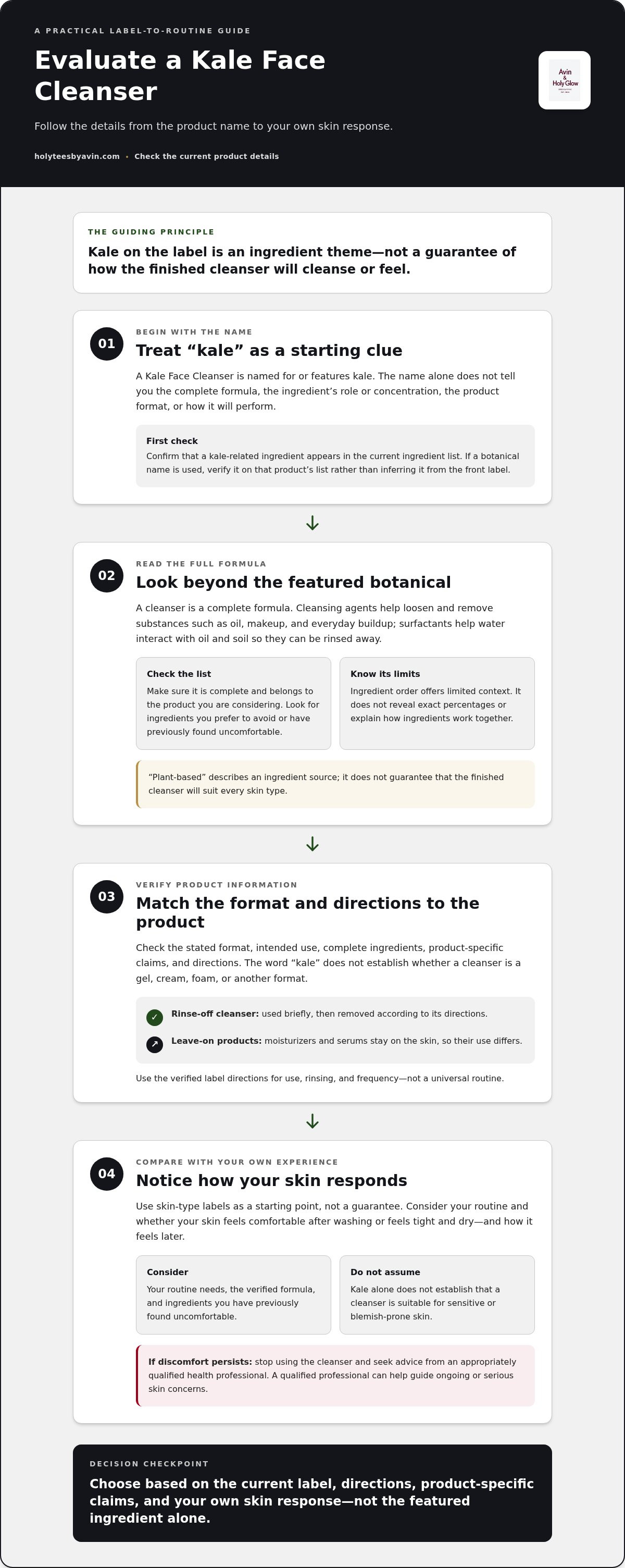
What does kale on a cleanser’s label actually tell you? A Kale Face Cleanser may sound like a clear choice for fresh, balanced skin, but a featured ingredient alone can’t tell you how the full formula will feel or whether it suits your routine.
It makes sense to look for plant-based ingredients and a cleanser that leaves your skin comfortable. But how a cleanser feels depends on the formula as a whole and your own experience. To choose thoughtfully, look beyond the name and check the product details that matter to you.
This guide explains what kale can and can’t tell you about a cleanser, how to review ingredients and directions, and what to consider if your skin tends to feel dry or reactive. We’ll also look at Avin & Holy Glow’s Kale Facial Cleanser as an option to evaluate, without assuming details that need to be confirmed on its current label. By the end, you’ll have a practical checklist for deciding whether it belongs in your routine.
Key Takeaways
- A Kale Face Cleanser is named for or features kale, but the name alone doesn’t show how the finished formula will cleanse or feel on your skin.
- Review the complete ingredient list and product directions to understand what the formula is designed to do.
- Use skin-type labels as a starting point, not a guarantee. Consider your own skin’s comfort and your routine needs.
- Follow the cleanser’s verified label directions for use, rinsing, and frequency rather than relying on a universal routine.
- Before choosing Holy Tees by Avin’s Kale Facial Cleanser, check its current ingredients, directions, and product-specific claims.
What Is a Kale Face Cleanser, and What Does the Name Tell You?
Does kale in a cleanser tell you enough to choose it? Not by itself. A Kale Face Cleanser is a facial cleansing product named for or featuring kale. The name identifies an ingredient theme, not the complete formula or how it will feel on your skin.
Kale is a leafy vegetable, as outlined in this overview of Kale. But information about kale as food doesn’t establish what it does in a cosmetic formula. Holy Tees by Avin lists a Kale Facial Cleanser among its skincare offerings. To assess that product, check its current label and listing rather than inferring ingredients or results from its name.
What does kale mean on a cleanser label?
The front label is a useful starting point. The full ingredient list gives more context about the finished product, including what appears alongside any kale-related ingredient. The name alone doesn’t reveal an ingredient’s concentration, its role in the formula, or how the cleanser performs. If the label uses a botanical name, confirm it appears on that product’s ingredient list before treating it as a verified ingredient.
A rinse-off cleanser is a complete formula, not a single ingredient. Seeing kale named on the package doesn’t guarantee a particular outcome, such as less oiliness, fewer blemishes, or added hydration. Look for claims made specifically about the product and read its directions. Then compare those details with what you want a cleanser to do in your routine.
How is a kale cleanser different from other face washes?
The word “kale” describes an ingredient theme, not a cleanser format. It doesn’t tell you whether the product is a gel, cream, foam, or another type, so compare formats only when the product information confirms them. A botanical focus also doesn’t prove that a cleanser is gentle or moisturizing. Those qualities depend on the full formula and the individual user’s experience.
When comparing face washes, check the stated format, intended use, complete ingredients, and directions. For a broader framework, review the brand’s hydrating facial cleanser buying guide. The same checks are useful across products and give you a better basis for comparison than a featured ingredient alone.
How a Kale Cleanser's Full Formula Shapes the Cleansing Experience
A cleanser’s feel and function come from its finished formula and intended use, not one highlighted botanical. Cleansing agents help loosen and remove substances such as oil, makeup, and everyday buildup. Surfactants help water interact with oil and soil so they can be rinsed away. The type and combination of cleansing agents, alongside the rest of the formula, influence the cleansing experience.
A rinse-off cleanser is used briefly and then removed according to its directions. Leave-on products, such as moisturizers or serums, stay on the skin, so their use differs. Neither format makes kale’s presence proof of a particular result. Harvard T.H. Chan School of Public Health discusses Vitamin K in the context of nutrition; that information doesn’t establish what kale does in a topical cleanser.
A featured botanical alone cannot predict a cleanser’s performance. Cleansing depends on the complete formula, its intended use, and how an individual’s skin responds.
What should readers check in the ingredient list?
Find the complete ingredient list on the product page or packaging, then compare it with the stated purpose and directions. Cosmetic ingredient lists may use standardized naming conventions, including INCI names, so a familiar common name might not appear exactly as expected. Ingredient order can offer limited context, but it doesn’t reveal exact percentages or explain how ingredients work together.
- Check that the ingredient list is complete and belongs to the product you’re considering.
- Look for ingredients you prefer to avoid or have previously found uncomfortable.
- Read product-specific directions and claims separately from general ingredient information.
If a detail is missing or unclear, treat it as unverified rather than filling in the gap based on the product name.
Can a plant-based ingredient guarantee a gentle cleanser?
No. “Plant-based” describes an ingredient source, not a guarantee that the finished cleanser will suit every skin type. Individual tolerance depends on the whole formula and a person’s own skin response. A botanical ingredient also doesn’t prove that a cleanser detoxifies skin, treats acne, reduces inflammation, or prevents signs of aging. Look for claims in the product’s verified details, not broad assumptions about kale.
If a cleanser causes persistent discomfort, stop using it and seek advice from an appropriately qualified health professional. For ongoing or serious skin concerns, a qualified professional can help guide your care. To review the brand’s listed products and check current details, explore Holy Tees by Avin skincare offerings.
Is a Kale Face Cleanser Right for Your Skin? Compare the Factors
A skin-type label can help you start a comparison, but it can’t guarantee how a cleanser will feel. For a Kale Face Cleanser, consider your routine and your own experience alongside the product’s verified formula and directions. Kale alone doesn’t establish that a cleanser is suitable for sensitive or blemish-prone skin.
| Factor | What to consider | What to verify |
|---|---|---|
| Skin feel | Does your skin feel comfortable after washing, or tight and dry? How does it feel later? | Check the complete ingredient list and the product’s stated use. |
| Routine needs | Are you looking for a cleanser for a particular time or step in your routine? | Confirm the directions and intended use on the current label. |
| Formula details | Consider the whole formula, not just its featured botanical. | Review the full ingredient list and any claims made specifically for the product. |
| Label information | Decide whether the available details answer your questions before you choose. | Verify any claims about skin type, ingredients, or product attributes. |
How should dry, oily, or combination skin assess a cleanser?
Pay attention to observable cues. After washing, does your skin feel comfortable or tight? Does that feeling change later in your routine? If different areas of your face feel different, note where and when. These observations can help you assess your own experience, but they don’t prove a cleanser will behave the same way for someone else.
Compare what you notice with the cleanser’s complete formula, stated purpose, and verified directions. Don’t assume Holy Tees by Avin’s Kale Facial Cleanser is intended for a particular skin type unless current product information confirms it.
What if your skin is sensitive or reactive?
Be deliberate. First, review the current ingredient list and directions. If you decide to try the cleanser, follow its verified instructions and avoid introducing several new products at once. That makes it easier to notice how your skin responds. Stop using it if irritation occurs; no ingredient theme can promise that a reaction won’t happen.
For ongoing irritation or a known skin condition, ask an appropriately qualified health professional for guidance. Before choosing, identify what information you need and then explore Holy Tees by Avin to review the current cleanser details.
How to Use a Kale Face Cleanser in a Simple Skincare Routine
Let the product label lead. Directions can vary by formula, so don’t assume every cleanser should be used for the same length of time or at the same frequency. For Holy Tees by Avin’s Kale Facial Cleanser, check the current product directions before use; the details here don’t confirm a specific method or schedule.
A simple routine framework is:
- Check the label. Confirm how the product is intended to be used and whether it should be rinsed off.
- Cleanse as directed. Follow the product’s instructions for application and contact time.
- Rinse if directed. Use the label’s guidance rather than assuming all cleansers are used the same way.
- Continue your routine. Apply any leave-on products according to their own instructions.
This is general skincare education, not a substitute for product-specific directions or medical advice.
Where does cleansing fit in a skincare routine?
In a basic routine, cleansing comes before leave-on skincare. After using a cleanser as directed, you can continue with products such as a serum or moisturizer, following each product’s label. A leave-on product stays on the skin, unlike a cleanser intended to be rinsed away. For more context on where a serum can fit, read the vegan serum guide for active living.
There isn’t one contact time or cleansing frequency that applies to every product. Use the current, verified directions for the cleanser you have, and don’t treat a general routine outline as a product instruction.
How can you tell whether the cleanser feels right?
Notice how your skin feels after use and later in your routine. Is it comfortable, or do you experience tightness, dryness, or irritation? These observations can help you decide whether to keep assessing the product, but they don’t prove a treatment effect or predict how another person will respond.
If you’re changing your routine, adjust one product or habit at a time when practical. That makes it easier to identify what may be connected to a change in skin feel. Follow the cleanser’s label, and stop using it if irritation occurs. For persistent reactions or concerns, seek advice from an appropriately qualified health professional.
Ready to review the product details before making a choice? Explore Holy Tees by Avin skincare.
How to Evaluate Holy Tees by Avin's Kale Facial Cleanser
Holy Tees by Avin lists Kale Facial Cleanser among its skincare offerings. That confirms the product name, but it doesn’t establish the cleanser’s ingredients, directions, skin-type guidance, or specific benefits. Evaluate it as you would any Kale Face Cleanser: use the current product information, not assumptions based on the featured ingredient or other products from the same brand.
Before deciding, open the current product listing and check whether it answers these questions:
- Ingredients: Is the complete ingredient list available, and does it help you assess the formula against your preferences?
- Directions: Does the listing explain how to use the cleanser and whether it should be rinsed off?
- Size: Is the product size stated clearly?
- Skin guidance: Does the listing identify who the cleanser is intended for, and is that claim specific to this product?
- Product claims: Are claims about ingredients or attributes clearly attached to this cleanser?
If the listing doesn’t answer a question, treat the detail as unconfirmed. The information available here doesn’t establish a particular skin type for the cleanser or explain who its stated use is for. Don’t fill those gaps with assumptions from the product name or from Holy Tees by Avin’s other skincare and cosmetics.
What product details should readers confirm before choosing?
Check the live listing and packaging for the current formula and instructions. Claims such as vegan, cruelty-free, paraben-free, or fragrance-related should be verified for this exact cleanser rather than inferred from the brand’s broader product categories. These terms describe different things: vegan concerns animal-derived ingredients, while cruelty-free concerns animal testing. Neither claim, by itself, establishes how a cleanser will feel on your skin.
Plant-derived is another separate description, not a guarantee of suitability. A product can meet a purchasing preference and still not match an individual’s routine or skin response. Consider ingredient sourcing, animal-testing claims, and personal skin fit as separate questions.
How can the cleanser fit a values-conscious routine?
Start with your own priorities. You may want a formula that meets a specific ingredient preference, a cleanser with clear directions, or product information that helps you assess its fit. Compare those priorities with claims documented for the current product. If details are missing, waiting for clearer information is a reasonable decision.
A confident choice is an informed one. Review the current cleanser details and explore Holy Tees by Avin to see what product information is available before deciding whether it belongs in your routine.
Make Your Next Cleanser Choice With Confidence
A Kale Face Cleanser’s name can point you toward an ingredient theme, but it can’t tell you everything you need to know. The finished formula and intended use shape the cleansing experience. Review the complete ingredient list and current directions, and treat skin-type claims as guidance to consider, not a promise of individual fit.
As you compare options, keep your routine needs and personal preferences in view. Notice whether your skin feels comfortable after use, and don’t assume a featured botanical guarantees a particular result. A clear, informed choice starts with verified product details, not marketing language alone.
Holy Tees by Avin lists Kale Facial Cleanser as a skincare offering and is a Black woman-owned small business. The information available here doesn’t confirm this cleanser’s exact formula, directions, certifications, or skin benefits, so check the current listing before deciding. Explore Holy Tees by Avin's Kale Facial Cleanser and compare its product information with your own priorities.
Take your time, check the label, and choose the cleanser that makes sense for your routine. To review Holy Tees by Avin’s current product information, explore the Kale Facial Cleanser.
Frequently Asked Questions
Is kale good for your skin when it is in a face cleanser?
Kale’s presence alone doesn’t prove a cleanser will produce a particular skin benefit. A face cleanser is a finished formula, and its use depends on its ingredients, design, and directions. Since cleansers are rinsed off, don’t assume information about kale as a food establishes what it will do in a skincare product. Review the cleanser’s specific ingredient list and claims before deciding whether it suits your routine.
Can a kale face cleanser help with acne or oily skin?
A Kale Face Cleanser shouldn’t be assumed to treat acne or control oily skin just because it features kale. A cleanser may help wash away surface oil and buildup, but that doesn’t establish a treatment effect. Check whether the product listing makes a specific claim, and assess the complete formula and directions. If acne is persistent or concerning, consult an appropriately qualified health professional rather than relying on a cleanser alone.
Is a kale cleanser suitable for sensitive skin?
A kale cleanser isn’t automatically suitable for sensitive skin. The featured botanical can’t predict how the whole formula will feel or whether an individual will tolerate it. Review the complete ingredient list and current product directions, and introduce the cleanser cautiously if you choose to try it. Stop use if irritation occurs. For ongoing irritation, a known skin condition, or questions about your skin, seek guidance from an appropriately qualified health professional.
How often should you use a kale face cleanser?
Use a kale face cleanser according to its verified product directions, since frequency can vary by formula. Don’t assume a cleanser should be used a set number of times each day simply because other products follow that schedule. Check the current label for how to apply and rinse it, then notice how your skin feels. If directions are missing or unclear, seek product-specific guidance before use.
Can a kale face cleanser remove makeup and sunscreen?
It depends on the cleanser’s formula and stated purpose, so don’t assume a kale cleanser removes all makeup or sunscreen. Check the product listing or label for specific cleansing claims and directions. After use, notice whether visible makeup or sunscreen residue remains, but don’t treat that observation as proof of full removal. If the product doesn’t state that it removes the products you wear, consult its directions or the maker for clarification.
What should you look for in a kale cleanser's ingredient list?
Look for the complete ingredient list, not only the featured ingredient on the front label. Check for ingredients you prefer to avoid or have previously found uncomfortable, and compare the list with the product’s stated use and claims. Ingredient names may use standardized cosmetic terminology. The list doesn’t necessarily reveal exact concentrations or how the finished formula will feel, so read the directions and assess the cleanser as a whole.
Is the Holy Tees by Avin Kale Facial Cleanser vegan and cruelty-free?
The available product information here doesn’t confirm whether Holy Tees by Avin’s Kale Facial Cleanser is vegan or cruelty-free. The brand’s broader skincare categories don’t verify either claim for this specific cleanser. Check the current product listing and packaging for clear product-specific statements and supporting details before relying on them. Vegan and cruelty-free refer to different product attributes, so verify each claim separately rather than treating one as proof of the other.

Article by
Avin
Avin is the founder and visionary behind Holy Tees by Avin, a Black woman-owned Brooklyn brand that uniquely bridges the worlds of expressive streetwear and ethical beauty. Driven by a mission to offer premium style without compromising on values, Avin curated a collection that features quality activewear, hoodies, and graphic tees paired alongside a dedicated line of vegan and cruelty-free cosmetics. Through her platform, she champions mindful living, creating high-performance skincare and beauty products that celebrate clean ingredients and sacred self-care.