
What if the best way to judge leggings isn’t by the label, but by how the fabric behaves under tension? It’s natural to worry that workout leggings might become see-through during a squat, stretch, or bend, especially when product photos reveal little about how they fit in motion. Choosing squat-proof leggings that aren't see through takes more than trusting a product description.
You can assess the details that matter before buying. Fabric construction, color, fit, and lighting all affect how opaque leggings appear, so compare them together rather than relying on one feature.
This guide explains how to evaluate leggings at home or in a store, and what to look for when shopping online. Whether you’re choosing workout leggings for training or everyday movement, a few practical checks can help you make a more informed choice.
Key Takeaways
- Opacity depends on how fabric behaves when stretched, so assess leggings during movement rather than relying on a label alone.
- Compare fabric and construction details, color, fit, and intended activity to find leggings that feel right for your workouts.
- Use a well-lit space to check how leggings look during squats, forward bends, and lunges.
- When shopping online, compare product details and images with your fit and movement needs.
- Avin & Holy Glow offers workout leggings and yoga leggings as options for an activewear wardrobe.
What Makes Squat-Proof Leggings Stay Opaque During Movement?
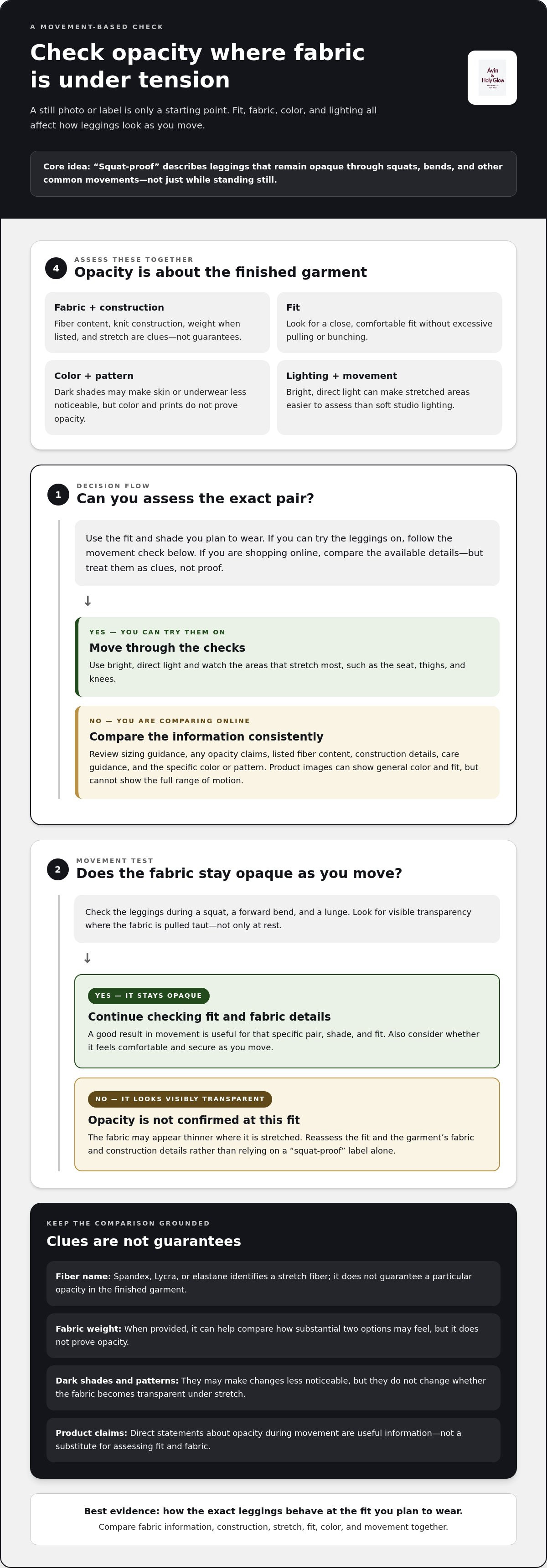
Leggings can look opaque while you’re standing still, then reveal more than you expect in a deep squat. That’s because opacity is tested under tension: as fabric stretches across the seat, thighs, or knees, it may become thinner and allow more light through. “Squat-proof” describes leggings that remain opaque through squats, bends, and other common movements, not simply a pair that looks covered in a static product photo.
Opacity is only one part of how leggings feel and function. A close fit describes how the garment sits against your body; compression refers to a feeling of pressure or hold. Softness is about how the fabric feels against your skin, while support can describe how secure the garment feels as you move. Coverage relates to how much of your body the garment covers. None of these qualities alone proves the fabric will stay opaque under stretch.
For another perspective on how activewear is reviewed, watch this video:
What does squat-proof mean in practice?
In practice, squat-proof means the fabric doesn’t become visibly transparent as you bend, squat, or lunge. A snug fit isn’t automatically a problem: leggings are designed to follow the body. The key is whether the fabric remains opaque at that fit or looks thinner where it’s pulled taut. Treat “squat-proof” on a product page as a useful claim to investigate, not a substitute for assessing fit and fabric.
Why can leggings look different when stretched?
Stretch spreads the knit across a larger area, which can make it appear thinner, especially over high-movement areas like the seat and thighs. How much it changes depends on factors such as fit and fabric construction. A fiber name alone can’t settle the question: Spandex, Lycra, or elastane describes a stretch fiber, but doesn’t guarantee a particular level of opacity in a finished garment.
Lighting matters, too. Bright, direct light can make stretched areas easier to assess, while soft studio lighting and carefully posed product photos may not show how leggings look mid-movement. Product images can help you understand color and general fit, but they can’t show how the fabric behaves through your full range of motion. A movement-based check is more revealing than appearance alone.
How Fabric, Color, and Construction Affect Leggings Opacity
A fabric label offers clues, not a verdict. Fiber content, knit construction, weight, and stretch all shape how leggings look on the body, and their effects work together. No single material automatically makes a pair opaque. The useful question is how the finished garment behaves at its actual fit, especially in areas that stretch as you move.
Which fabric details are useful when comparing leggings?
Start with the listed fiber content, then look for information about fabric construction and care. Fiber content tells you what materials are used; construction describes how they’re formed into fabric. Fabric weight, when provided, can help you compare how substantial two options may feel, but it doesn’t prove how opaque either one will be. Treat these details as parts of a fuller picture, not guarantees.
Stretch matters as well. The fabric needs to move with you, and the amount of stretch and how it recovers can affect how it sits on the body. Check whether product information describes the material as stretchy, then compare that with the sizing guidance. Care instructions can help you understand how to wash and maintain the garment. Don’t assume a familiar fiber name or technical-sounding label tells the whole story.
Do dark colors always prevent transparency?
No. Darker shades may make skin and underwear less noticeable than pale shades, but color can’t compensate for fabric that becomes too stretched at the fit you need. Contrast matters, too: an underlayer that differs strongly from the fabric may show more clearly than one close to your skin tone. Bright lighting can reveal details that are less apparent in softer light.
Patterns can draw the eye and make changes in the fabric less obvious, but they don’t establish opacity either. A print may disguise shadows without changing how the material behaves. When comparing color options, consider the garment’s fit and fabric details alongside the shade, and assess the specific pair rather than relying on color assumptions.
Takeaway: Opacity depends on the garment as worn, not color alone. For squat-proof leggings that aren't see through, weigh fabric information, construction, stretch, and fit together, then assess the exact shade you plan to wear.
Holy Tees by Avin offers workout leggings and yoga leggings. The Holy Tees by Avin activewear collection is one option to consider as you compare leggings for training and everyday movement.
How to Compare Squat-Proof Leggings Before You Buy
A side-by-side comparison helps separate what a product page actually tells you from what a polished photo might suggest. Use the same criteria for each pair, then give more weight to the details that matter for your movement and comfort. There isn’t one ideal fit or color for everyone. Look for a pair that suits how you plan to wear it and feels comfortable during activity.
| What to compare | What to look for | How to weigh it |
|---|---|---|
| Fit | Sizing guidance and descriptions of how the leggings sit | Look for a close, comfortable fit without excessive pulling or bunching. |
| Opacity information | Direct statements about opacity during movement, if provided | Treat clear claims as useful information, not a substitute for your own assessment. |
| Fabric details | Listed fiber content, construction details, and care guidance | Compare the information consistently. A fabric name alone can’t establish opacity. |
| Color | The specific shade or pattern shown | Choose what you like, but don’t assume a dark color guarantees opacity. |
| Intended activity | Whether the garment is described for yoga, training, or everyday wear | Match the intended use to the movements and comfort you expect. |
Which fit details should shoppers compare?
Fit preferences vary. Some people prefer a close, held-in feel; others want less pressure. Neither is the one ideal. Look for leggings that let you bend and squat without uncomfortable pulling or fabric bunching. Consider how the waistband sits as you move, and whether seams seem likely to rub or shift based on the garment description and images. A size that feels comfortable standing still should also allow your usual range of motion.
How can product information help you compare options?
Read each product page in the same order: fit and sizing, fiber content, construction details, then care guidance. Note what’s explicitly stated. Don’t treat a model’s pose, fabric finish, or attractive styling as proof that leggings stay opaque during exercise. Multiple product views can help you assess the cut and visible details, but photos can’t show exactly how fabric responds when stretched on your body.
If opacity isn’t addressed directly, mark it as unknown rather than assuming. This keeps your comparison grounded in facts and shows where you may need a movement-based assessment before deciding. For broader context on choosing clothing that brings together activity and faith, read The Christian Activewear Revolution: Merging Technical Excellence with Faith. Keep your priorities at the center: weigh opacity evidence alongside fit, movement, and comfort.
How to Test Leggings for Opacity at Home
A careful home check can show how leggings look under tension, in motion, and in different lighting. Choose a private space where you can move comfortably, with a full-length mirror if you have one. This check offers practical evidence, not an absolute guarantee: lighting, fit, and the way fabric stretches can all affect what you see.
Use this movement and lighting checklist
- Start standing. Check the front, back, and sides in bright, even light. Notice whether the waistband and fabric sit smoothly or already look overly stretched.
- Try a controlled squat. Lower only as far as feels comfortable, then check the seat and thighs in the mirror. Look for visible changes as the fabric stretches.
- Hinge forward. Bend at the hips as if reaching toward your knees or shins. Check front and back coverage, and note whether the waistband shifts or the fabric pulls.
- Step into a lunge. Bend each knee comfortably, one side at a time. Observe how the fabric behaves over the thighs and knees, and whether seams or the waistband move out of place.
- Repeat in ordinary indoor lighting. Compare what you see with the bright-light check. Different lighting can reveal or soften contrast, so neither setting tells the whole story on its own.
- Move naturally for a moment. Walk, sit, and stand. Notice whether the leggings remain comfortable and secure, without persistent pulling, bunching, or shifting.
Keep the movements controlled. You don’t need to force a deep squat or an uncomfortable stretch to test a pair. If the leggings feel painfully tight, roll down, or restrict your movement, that fit may not suit you, regardless of how opaque the fabric appears. Comfort and freedom to move matter alongside coverage.
What if you’re ordering online?
Product photos can’t show how a particular pair behaves on your body during a squat or bend. Compare the listed sizing and garment details, and review the return terms provided with the product before ordering. Once the leggings arrive, try them on in a private space and repeat the checks before wearing them for a workout.
Use the results to judge whether a pair feels secure through the movements you actually do. Holy Tees by Avin offers workout leggings for training and everyday movement; see the Holy Tees by Avin activewear collection.
Choose Workout Leggings That Fit Your Movement and Values
A confident choice comes from weighing what you know, what you need, and how the leggings feel in motion. No single label or product image can answer every question. Use the garment details available, then prioritize your comfort and the movements you’ll ask the leggings to support.
How do you make a confident final choice?
Start with your non-negotiables. If opacity during squats is essential, look for direct product information about coverage and assess the garment in motion when you can. Pair that with fit guidance, listed fabric details, and care instructions. Keep facts separate from impressions: a dark color, close-fitting model photo, or reassuring product name may look promising, but doesn’t prove how the leggings will behave on you.
Next, consider your routine. For yoga, you may care about whether the waistband stays comfortable through bends and holds; for strength training, you may focus on how the fabric looks during squats and lunges. Whatever the activity, comfortable movement matters. Leggings shouldn’t require you to ignore persistent pulling, bunching, or shifting just to feel covered.
Use a simple decision filter:
- Opacity: Is there clear information, and can you assess coverage during movement?
- Fit: Can you bend and squat without uncomfortable pulling or bunching?
- Movement: Does the garment feel secure through the activities you actually do?
- Product details: Are fiber, care, and sizing descriptions clear enough to inform your choice?
- Personal values: Does the garment’s style and purpose feel right for you?
These checks can help narrow your options, but your priorities set the standard. For more perspective on clothing that brings faith and fitness together, explore The Ultimate Guide to Christian Fitness Apparel: Merging Faith and Movement.
Where do Christian activewear and personal style fit in?
Faith-inspired activewear can be part of your decision alongside practical needs like fit, opacity, and freedom of movement. Personal style matters, too. Choose workout clothes that feel like an authentic fit for your day, whether you’re training or moving through everyday routines. Let those values guide your selection without letting them replace the garment checks that help you feel comfortable.
Holy Tees by Avin offers workout leggings and yoga leggings as part of its activewear range. The Holy Tees by Avin activewear range includes options to consider alongside your movement and style preferences.
Choose Leggings with Confidence for Every Move
A confident choice comes from looking beyond the label. Assess opacity during movement, compare fabric and construction details where available, and choose a comfortable fit that lets you squat, bend, and lunge without persistent pulling or shifting. Color can influence what you see, but it can’t guarantee that leggings remain opaque when stretched.
Use the at-home movement check to see how a specific pair looks in different lighting, and let clear product information guide online comparisons. The best squat-proof leggings that aren't see through are the ones that meet your coverage needs while feeling comfortable for the activities you enjoy.
Holy Tees by Avin offers workout leggings and yoga leggings, alongside activewear that includes technical-fabric pieces. If faith-inspired activewear fits your personal style, browse the collection and choose leggings that suit your movement.
Choose with care, move with confidence, and let your comfort lead the way. Explore Holy Tees by Avin’s activewear range.
Frequently Asked Questions
How can I tell if leggings are squat-proof?
Test the leggings while moving, not just while standing. In bright, even light, wear them at a comfortable fit and check how they look during a squat, forward bend, and lunge. Pay attention to the seat and thighs, where fabric may stretch most. Product descriptions can offer useful clues, but a label alone can’t show how the pair will behave on your body.
Can black leggings still become see-through when you squat?
Yes. Black fabric may make skin or underwear less noticeable, but color doesn’t guarantee opacity under tension. If the leggings are stretched too tightly or the fabric becomes thin across the seat or thighs, visibility may change during a squat. Check the specific garment in bright light and while moving. Consider fit and fabric details alongside color instead of relying on a dark shade alone.
How do I test leggings for transparency at home?
Try them on in a private space with a mirror and check them in bright, even light. Do a controlled squat, hinge forward, and lunge on each side, using only a comfortable range of motion. Look at the front, back, and areas where the fabric stretches. Then check in ordinary indoor lighting. Notice visible changes, shifting, or pulling, while remembering that lighting can affect what you see.
Does thicker fabric always make leggings more opaque?
No. Fabric weight can be a helpful detail if the product page provides it, but thickness alone doesn’t prove that leggings will stay opaque. Construction, stretch, fit, and lighting also affect appearance. A thicker-feeling fabric may still become more transparent if it’s pulled too tightly across the body. Compare all the garment details available, then assess how the specific pair looks during movement.
Are lighter-colored leggings more likely to show through?
Lighter colors can make skin, underwear, or shadows easier to notice, particularly under bright light or when fabric is stretched. That doesn’t mean every light-colored pair will become transparent, just as a dark shade isn’t a guarantee of opacity. Contrast matters, too: an underlayer that differs strongly from the fabric may be more visible. Judge the specific leggings at their intended fit and in motion.
What should I look for when buying workout leggings online?
Compare sizing and fit guidance, listed fiber content, construction details, care instructions, color, and intended activity. Look for direct information about opacity, but don’t infer it from a product name or posed image. Photos from several angles can help you understand the garment’s cut, though they can’t show exactly how it behaves on your body. Review the return terms provided with the product before placing an order.
Can tight leggings be comfortable and still stay opaque?
Yes, a close fit can feel comfortable while remaining opaque, but the fit shouldn’t create excessive pulling or restrict movement. Try bending and squatting to see whether the waistband stays in place and the fabric remains comfortable across your body. If leggings feel painfully tight, bunch, or shift as you move, consider another size or fit. Comfort and opacity are both important, and neither should be assumed from appearance alone.

Article by
Avin
Avin is the founder and visionary behind Holy Tees by Avin, a Black woman-owned Brooklyn brand that uniquely bridges the worlds of expressive streetwear and ethical beauty. Driven by a mission to offer premium style without compromising on values, Avin curated a collection that features quality activewear, hoodies, and graphic tees paired alongside a dedicated line of vegan and cruelty-free cosmetics. Through her platform, she champions mindful living, creating high-performance skincare and beauty products that celebrate clean ingredients and sacred self-care.