
A vegan label can tell you what isn’t in a lip balm, but it can’t tell you whether the formula will feel right on your lips. The benefits of vegan lip balm begin with choosing care made without animal-derived ingredients. Comfort and everyday appeal depend on the formula itself.
It’s reasonable to want your beauty choices to reflect your values without settling for a product that doesn’t suit you. Vegan and cruelty-free aren’t interchangeable claims: vegan refers to ingredients, while cruelty-free refers to animal testing. Neither label alone tells you how a balm feels or which specific ingredients it contains.
This guide explains what a vegan claim means, where its limits are, and which formula details can help you decide what fits your preferences. You’ll also learn how to read ingredient lists and distinguish ethical claims without assuming every vegan balm performs the same way. Avin & Holy Glow offers Vegan Lip Balm for shoppers looking to make a more intentional choice in their everyday lip care.
Key Takeaways
- Learn what a vegan claim tells you about a lip balm’s ingredients, and what it doesn’t tell you.
- Understand why the benefits of vegan lip balm depend on the full formula when it comes to comfort and moisture support.
- Compare vegan and cruelty-free claims to identify which reflects your priorities.
- Use ingredient preferences, label details, and feel preferences to narrow down a balm that suits your routine.
- Explore Holy Tees by Avin’s Vegan Lip Balm as an option for intentional lip care, and assess it using the available product details.
What Is Vegan Lip Balm, and Why Do People Choose It?
Vegan lip balm is formulated without animal-derived ingredients. That definition describes what the formula contains, not how it performs or what impact its production has on the environment. Shoppers may choose vegan lip care to match ingredient preferences, animal-conscious values, or both. The benefits of vegan lip balm begin with that ingredient choice, while comfort depends on the complete formula.
In plain language: a conventional lip balm may use animal-derived ingredients, while a vegan lip balm is made without them. That difference doesn’t automatically make one formula more moisturizing or comfortable than another. For a general overview of lip care and commonly used ingredients, see Lip balm.
Which ingredients can make a lip balm non-vegan?
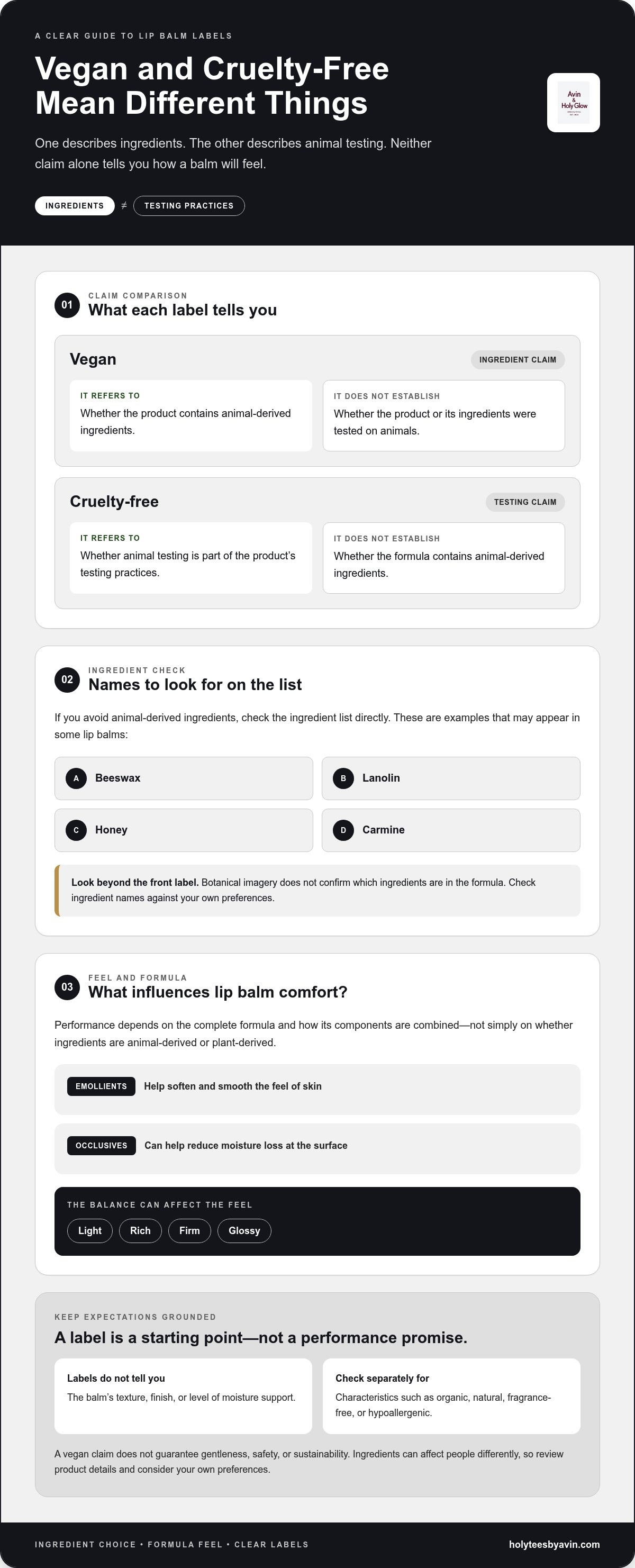
Beeswax is a familiar animal-derived ingredient used in some lip balms, but it isn’t in every formula. Depending on the product, shoppers checking for animal-derived ingredients may also look for lanolin, honey, or carmine. Read the ingredient list rather than relying on front-label imagery: flowers, fruit, and other botanical visuals don’t establish what’s in the formula. If you avoid specific ingredients, check for their names directly.
Who might prefer vegan lip balm?
Vegan lip balm may suit shoppers who prefer to avoid animal-derived ingredients for personal, ethical, or lifestyle reasons. For some, the choice reflects a broader approach to beauty; for others, it’s simply an ingredient preference. Neither reason is universal, and a vegan label alone doesn’t establish whether a balm will suit every person’s needs.
Keep values and lip-care expectations distinct. A vegan claim can help you identify a formula made without animal-derived ingredients, but it doesn’t promise a particular texture, finish, or level of moisture support. Those qualities depend on the complete formulation and your preferences. Vegan describes ingredient sourcing, not a guarantee of safety or environmental impact. Read the label for details that matter to you, then assess how the balm feels in your routine.
Choosing with intention doesn’t require assumptions. Check ingredients against your own standards and evaluate comfort separately. That’s a practical way to weigh the values-based appeal of vegan lip care while keeping expectations grounded.
The Main Benefits of Vegan Lip Balm Depend on Its Formula
A vegan label can support an ingredient choice, but it can’t predict how a balm will feel or perform. The benefits of vegan lip balm depend on the complete formula and what you find comfortable. A product may fit your values yet feel too waxy, too glossy, or simply different from what you prefer. Treat the label as a starting point, not a performance promise.
A vegan claim describes ingredient exclusions, while performance depends on formulation. Avoiding animal-derived ingredients may be a meaningful benefit in itself for shoppers who have made that choice. Moisture support and wear, however, depend on the full composition, not whether ingredients are animal-derived or plant-derived.
How ingredient choices can affect lip feel
Different ingredient types can contribute to a balm’s texture and function. Emollients are used to help soften and smooth the feel of skin, while occlusive ingredients can help reduce moisture loss by forming a barrier at the surface. How these components are combined matters: the balance can influence whether a balm feels light, rich, firm, or glossy. These are general formulation principles, not claims about a particular product.
When comparing balms, use the full ingredient list and product details alongside your own preferences. A vegan label doesn’t reveal the texture, finish, or level of moisture support you’ll experience.
What vegan lip balm does not guarantee
Vegan and cruelty-free refer to different claims. Vegan concerns whether a product contains animal-derived ingredients; cruelty-free concerns animal testing. A vegan claim alone doesn’t establish that a product is cruelty-free. It also doesn’t tell you whether the formula is organic, natural, fragrance-free, or hypoallergenic. Those are separate characteristics, so look for relevant label information rather than making assumptions.
Vegan status doesn’t guarantee that a product will be gentle, safer, or more sustainable. Cosmetic ingredients can affect people differently, and individual reactions depend on the person and the formula. The U.S. Food and Drug Administration provides information about common allergens found in some cosmetic products. A vegan label doesn’t tell you whether a balm contains a specific fragrance, dye, or other ingredient you prefer to avoid.
For a values-conscious option, explore Holy Tees by Avin Vegan Lip Balm. Review the product details and consider your formula preferences rather than assuming performance from the vegan claim alone.
Vegan vs. Cruelty-Free Lip Balm: Know What Each Claim Means
Ethical labels can point to different parts of a product’s story. A vegan claim concerns ingredients; a cruelty-free claim concerns animal testing. Understanding the distinction helps you match the wording on a lip balm label to the value you care about, without treating either claim as proof of comfort or performance.
| Claim | What it refers to | What it doesn’t tell you by itself |
|---|---|---|
| Vegan | Whether the product contains animal-derived ingredients. | Whether the product or its ingredients were tested on animals. |
| Cruelty-free | Whether animal testing is part of the product’s testing practices. | Whether the formula contains animal-derived ingredients. |
Vegan describes ingredients; cruelty-free describes animal testing. A balm may meet one description without automatically meeting the other. A formula without animal-derived ingredients doesn’t, on that basis alone, establish its animal-testing status. Likewise, a cruelty-free claim doesn’t tell you whether beeswax or another animal-derived ingredient is present.
How to read ethical claims on a lip balm label
Start with the specific claim, then review the ingredient information and product details to understand its scope. A clear vegan claim addresses animal-derived ingredients; cruelty-free wording addresses animal testing. Broad phrases such as “ethical” or “conscious” may express a brand’s values, but without further explanation they don’t define which ingredients or practices they cover. Review the information for the individual balm rather than assuming every product from a brand has identical attributes.
Can vegan lip balm still contain ingredients you want to avoid?
Yes. Vegan status answers one ingredient question, not every personal preference or sensitivity concern. A vegan formula may still contain ingredients you don’t prefer, such as a particular fragrance or other component. That doesn’t make the ingredient universally harmful; individual needs and reactions can differ. Read the complete ingredient list and compare it with the ingredients you choose to avoid.
These distinctions make ethical claims more useful. If avoiding animal-derived ingredients is central to your choice, vegan status may be meaningful. If animal-testing practices matter too, look for information addressing that claim separately. The benefits of vegan lip balm are clearest when the label supports your values and the formula details meet your expectations.
How to Choose and Use Vegan Lip Balm for Everyday Comfort
Choosing a balm gets easier when you separate your priorities from what a label can promise. Use this sequence to compare options without assuming every vegan formula feels or performs the same:
- Define your ingredient preferences. Decide which ingredients you want to avoid or include.
- Read the label. Look for a clear vegan claim and an ingredient list you can review.
- Compare claims. Check whether the product information addresses other qualities that matter to you, such as cruelty-free status.
- Assess the feel. Consider texture, finish, and scent according to your preferences.
What should you look for in a vegan lip balm?
Start with a clearly identified vegan claim and accessible ingredient information. Then compare details that are available, such as whether the formula has a finish or scent you prefer and whether the packaging suits your routine. These are personal considerations, not measures of how well a balm works. No single ingredient or label claim guarantees a particular result, so use product information to guide your choice and your own experience to assess comfort.
Texture is personal. You may prefer a barely noticeable layer or a richer feel with visible shine. The same goes for scent and how often you want to apply balm. The benefits of vegan lip balm can include making an ingredient choice that fits your values, while everyday comfort depends on the formula and your preferences.
How to make lip balm part of a simple routine
Apply balm when your lips feel dry, or before conditions you find drying, such as cold or windy weather. Reapply according to your comfort and the product’s directions. Keep expectations practical: lip balm is an everyday care product, not a treatment for persistent or severe symptoms. If you experience an unwanted reaction, stop using the product. Individual responses can vary.
As you compare lip-care choices, you may also find it useful to explore a guide to vegan lip gloss and beeswax lipsticks. Different product types and ingredient preferences call for their own label checks, so keep your priorities in view rather than relying on a broad category name alone.
For a vegan lip-care option to consider, explore Holy Tees by Avin Vegan Lip Balm. Use the product information and your comfort preferences to decide whether it fits your everyday lip care.
Explore Holy Tees by Avin Vegan Lip Balm With Clear Expectations
A thoughtful lip-care choice brings together what you want to avoid, the claims that matter to you, and the feel you prefer. Keep one distinction in focus: vegan describes ingredient sourcing, while comfort depends on the complete formula. A vegan label can help you identify a product that aligns with your ingredient priorities, but it doesn’t predict texture, finish, or how it will feel in your routine.
Choose lip care that reflects your priorities
Before deciding, consider four things: which animal-derived ingredients you want to exclude, whether animal-testing claims matter to you, how clearly the product information explains its claims, and what kind of feel you enjoy. These priorities are personal. The benefits of vegan lip balm may include making an ingredient choice that reflects your values, while everyday comfort is something to assess separately.
Holy Tees by Avin offers Vegan Lip Balm within its mindful beauty range. If you’re comparing other lip-care formats and ingredient preferences, the guide to vegan lip gloss and beeswax lipsticks is another useful resource. Each product has its own details, so evaluate its information on its own rather than assuming that claims or ingredients carry across a brand’s range.
Make an informed next choice
Review the product information and ingredient details for the specific balm you’re considering. Check that its vegan claim matches your preferences, and look for clear information about any other qualities important to you. Don’t infer a particular ingredient, texture, finish, result, or certification from the word “vegan” alone. That keeps your expectations grounded and your choice intentional.
Holy Tees by Avin’s Vegan Lip Balm is an option for shoppers seeking vegan lip care. Let your ingredient priorities guide the first step, then consider personal feel based on the product information and your own experience. Explore the brand’s beauty products and choose with your values and preferences in view.
Choose Lip Care That Reflects Your Values
The benefits of vegan lip balm begin with a clear ingredient choice: vegan describes the absence of animal-derived ingredients, while comfort depends on the complete formula. A vegan claim doesn’t guarantee a particular feel, finish, or level of moisture support. Read the ingredient information, compare the claims that matter to you, and let your preferences guide the final choice.
Keep ethical terms distinct, too. Vegan refers to ingredients; cruelty-free refers to animal testing. Holy Tees by Avin offers Vegan Lip Balm as part of its mindful beauty range, and its beauty products are cruelty-free. The brand is also a Black woman-owned small business.
Ready to explore a vegan lip-care option? Explore Holy Tees by Avin’s Vegan Lip Balm and review the product information to decide whether it fits your routine.
Frequently Asked Questions
What are the benefits of vegan lip balm?
The benefits of vegan lip balm include avoiding animal-derived ingredients and choosing lip care that may better reflect your personal or ethical values. Moisture support and comfortable wear depend on the complete formula, not the vegan label alone. Check the ingredient list and product details to see whether the balm suits your preferences. Vegan status doesn’t guarantee a particular texture, finish, or result.
Is vegan lip balm the same as cruelty-free lip balm?
No. Vegan describes ingredients, while cruelty-free refers to animal testing. A balm can be vegan without that claim explaining its testing practices; a cruelty-free balm may still contain animal-derived ingredients. If both qualities matter to you, look for clear information addressing each one. Neither claim by itself tells you whether the balm will feel comfortable or meet your other ingredient preferences.
Can vegan lip balm contain beeswax?
No. Beeswax is animal-derived, so a lip balm containing it isn’t vegan. Some lip balms use beeswax, while others don’t, so check the ingredient list rather than assuming based on the product category or imagery. If avoiding animal-derived ingredients is important to you, look for a clearly stated vegan claim and review the formula details against your preferences.
Is vegan lip balm better for dry lips?
Not necessarily. A vegan label describes ingredient sourcing, not how much moisture support a balm provides. Comfort for dry lips depends on the full formula and how it feels for you. Compare product information and, if you choose to try a balm, notice whether it feels comfortable in your routine. A vegan formula isn’t automatically more effective than a non-vegan one for dryness.
Does vegan mean a lip balm is natural or chemical-free?
No. Vegan means the formula is made without animal-derived ingredients. It doesn’t establish whether a product is natural, organic, fragrance-free, or free of any particular ingredient. “Chemical-free” isn’t a useful way to assess a formula, since ingredients are chemicals whether they come from plants or are made synthetically. Read the ingredient list and look for specific product claims that match your preferences.
How can I tell whether a lip balm is vegan?
Look for a clear vegan claim on the product, then review its ingredient information. Beeswax, lanolin, honey, and carmine are examples of animal-derived ingredients that may appear in lip products. A front-label image or broad phrase about values doesn’t establish what’s in the formula. If a particular ingredient matters to you, check the full list for the specific balm before deciding.
How often should I apply vegan lip balm?
Apply lip balm when your lips feel dry, and follow the directions provided for that product. How often you reach for it depends on your comfort and routine, so there isn’t one frequency that suits everyone. If a balm causes an unwanted reaction, stop using it. Persistent or severe lip symptoms aren’t something to rely on balm alone to address; consider seeking appropriate healthcare advice.

Article by
Avin
Avin is the founder and visionary behind Holy Tees by Avin, a Black woman-owned Brooklyn brand that uniquely bridges the worlds of expressive streetwear and ethical beauty. Driven by a mission to offer premium style without compromising on values, Avin curated a collection that features quality activewear, hoodies, and graphic tees paired alongside a dedicated line of vegan and cruelty-free cosmetics. Through her platform, she champions mindful living, creating high-performance skincare and beauty products that celebrate clean ingredients and sacred self-care.