
A bb cream can simplify your makeup routine, but it shouldn’t automatically replace skincare or sun protection. If you’ve wondered whether it’s a lighter foundation or a tinted moisturizer with a new name, the confusion is understandable: formulas vary, and one product won’t suit every skin type or preference.
This guide explains what BB cream typically does, how it compares with tinted moisturizer, foundation, and CC cream, and how to assess coverage and finish without relying on all-in-one promises. You’ll also find practical shade-matching and application tips, plus guidance on where skincare and sunscreen fit. Avin & Holy Glow offers BB cream alongside foundations and tinted facial moisturizers, so you can compare different complexion formats as you decide what belongs in your routine. Start with the look and feel you want, then check the details of each product.
Key Takeaways
- Think of bb cream as a complexion product whose coverage and purpose vary by formula, not as a guaranteed all-in-one solution.
- Compare BB cream, foundation, and tinted moisturizer by their typical purpose and the coverage you prefer.
- Apply complexion makeup over skincare in thin layers, building gradually and following the product’s directions.
- Check undertone, test shades along the jawline when possible, and assess the match in natural light against your face and neck.
- Choose based on your routine and desired result, and verify product-specific claims such as ingredients or sun protection before relying on them.
What Is BB Cream, and What Does It Actually Do?
BB cream is a complexion makeup product commonly called “beauty balm” or “blemish balm.” It is designed to even the look of skin, though its formula and performance vary. The name describes a category, not a standard recipe. One BB cream may look and feel quite different from another, so don’t assume every product with the label offers the same coverage, finish, or skincare effects.
In everyday use, think of BB cream as a complexion step that adds pigment. Depending on the formula, it may provide a subtle veil of coverage or a more noticeable evening effect. The term itself doesn’t guarantee that a product contains moisturizer, primer, active skincare ingredients, or sunscreen. For background on the category and the meaning behind its name, explore this overview of BB cream.
What does BB cream mean in everyday makeup?
Think of the name as a broad product label, not a promise of identical ingredients or results. Marketing phrases such as “all-in-one,” “hydrating,” or “protective” are reasons to read the packaging, not substitutes for doing so. Check the ingredient list, product claims, and directions. A product name alone can’t confirm a skincare benefit.
Keep each part of your routine clear. Apply your usual skincare as directed, then use complexion makeup according to its directions. Don’t automatically count BB cream as your moisturizer, even if it’s marketed as a makeup-skincare hybrid. Likewise, don’t treat it as sun protection unless the product label specifically makes an SPF claim. If sun protection is part of your routine, use a sunscreen product as directed rather than relying on the category name.
Shopper’s rule: Check the label for ingredients, stated benefits, coverage, directions, and any SPF claim. Don’t infer them from “BB” alone.
Who might prefer BB cream?
BB cream may appeal if you want one straightforward complexion step or a less involved makeup routine. Focus on the result you want: a light-looking veil, a more even appearance, or a particular finish described on the packaging. Since formulas differ, check the product’s claims and directions before deciding.
If you want precise coverage in particular areas, compare complexion formats rather than assuming BB cream will meet that goal. Foundation or concealing cream may be worth considering for a more targeted result, while tinted facial moisturizer may suit someone who prefers tint in a moisturizer format. These are general distinctions, not guarantees. Use each product’s stated coverage and finish to guide your choice.
How BB Cream Works in a Makeup and Skincare Routine
A simple routine works best when each product has a clear role. Skincare prepares your face; complexion makeup adds the look you want. Apply skincare first, let it settle, then use makeup according to its directions. BB cream may streamline your complexion routine, but it doesn’t automatically replace moisturizer, primer, or sunscreen.
Where does BB cream go in a morning routine?
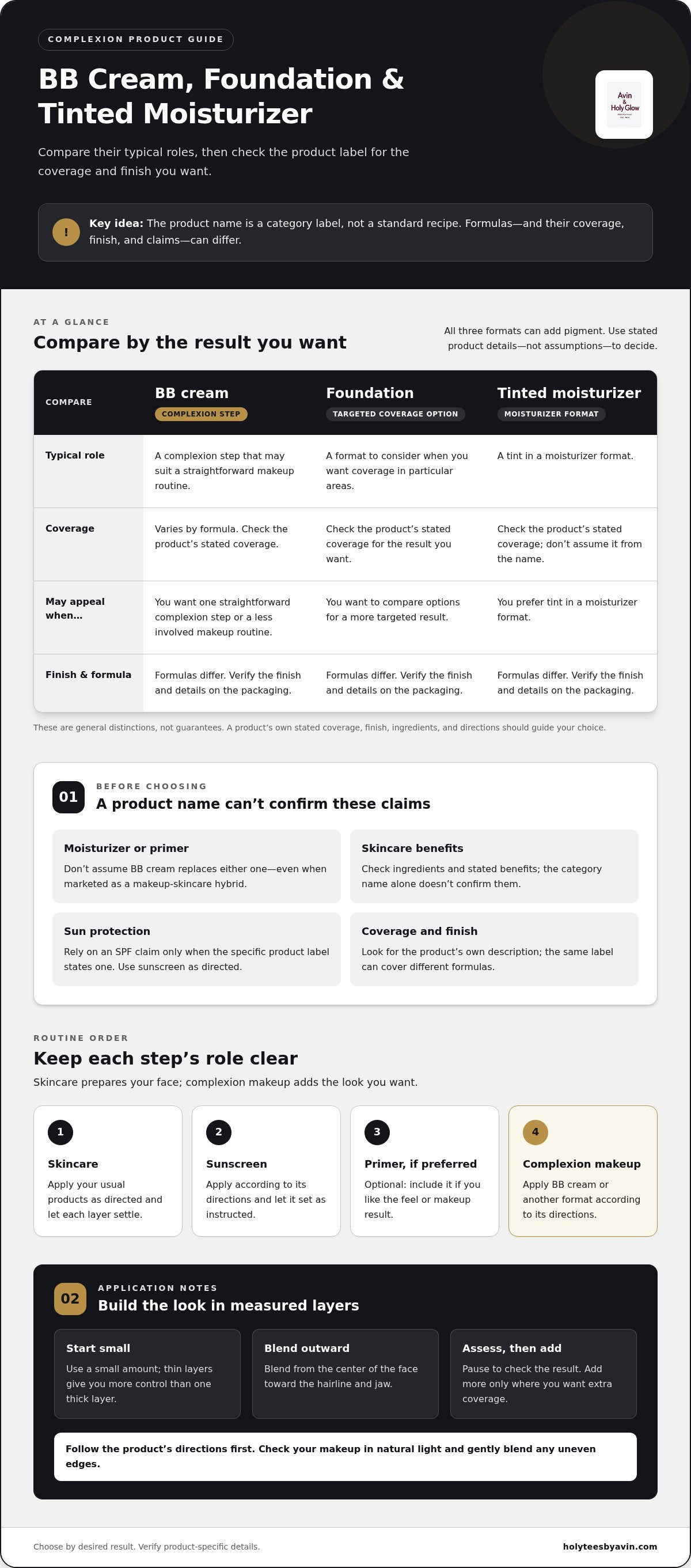
Start with your usual morning skincare, such as cleanser and moisturizer, and let each layer settle before applying makeup. Use sunscreen according to its own directions. Primer is optional: use it if you prefer the feel or makeup result, rather than treating it as a required step.
- Apply skincare products as directed and allow them to settle.
- Apply sunscreen according to its product directions, then let it set as instructed.
- Add primer if it suits your preferred routine and makeup result.
- Apply complexion makeup, following its directions.
An SPF claim applies only to the specific product that states it. Don’t assume BB cream provides sun protection from its name alone. If your routine includes sunscreen, keep using it as directed even when your complexion product is marketed as multipurpose.
How can you apply BB cream evenly?
Start with clean hands or tools and a small amount of product. Thin layers give you more control than applying a thick layer at once, and let you stop when you reach your preferred coverage. Check the product’s directions first, since they take priority over general application tips.
- Dot a small amount near the center of your face, such as the cheeks, forehead, and chin.
- Blend outward with clean fingers, a brush, or a sponge, using a method allowed by the product directions.
- Use light, even strokes and take extra care around the sides of the nose, hairline, and jaw.
- Pause to assess the result, then add a little more only where you want extra coverage.
Check your makeup in good natural light to spot missed edges or areas where product has gathered. If it looks uneven, blend the boundary gently rather than adding more everywhere. Clean application tools regularly, and avoid sharing them, to keep your routine tidy.
Keep the process personal: skincare first, makeup in measured layers, and product claims checked individually. To compare complexion options, browse Holy Tees by Avin’s beauty range and consider which format fits your routine.
BB Cream vs. Foundation vs. Tinted Moisturizer: How to Choose
Choose a complexion product by the result you want, not by assumptions attached to its name. BB cream, foundation, and tinted moisturizer can all add pigment, but their typical purposes differ. Formulas within each category vary, so check the packaging for coverage and finish instead of expecting every product to behave alike.
BB cream
Typical purpose: A complexion step that may suit someone seeking a straightforward makeup routine.
Coverage expectations: Varies by formula. Check the product’s stated coverage and finish.
May appeal to: Someone who wants a complexion product in a simple routine and is comfortable choosing based on the specific product details.
Foundation
Typical purpose: To create a more tailored complexion result, with options across different coverage levels.
Coverage expectations: Varies from sheer to fuller coverage, depending on the formula and application. Foundation isn’t automatically heavier than other formats.
May appeal to: Someone looking for a specific coverage level or a more deliberate, even-looking base.
Tinted moisturizer
Typical purpose: A moisturizer format with added tint.
Coverage expectations: Often intended to give a subtle tint, but the result depends on the individual product.
May appeal to: Someone who prefers a moisturizer format with some added color as part of their routine.
When might BB cream suit your makeup preferences?
This category may fit if you want one straightforward complexion step, but don’t assume every formula feels the same or provides a particular level of coverage. Check the shade information, stated coverage, and finish where available. Consider how you want makeup to look and feel during a typical day, then compare those preferences with the details for the individual product.
When might foundation or tinted moisturizer be a better fit?
Foundation is worth considering when you want a defined coverage range or a more tailored base. Tinted moisturizer may suit you if you prefer a moisturizer format with a touch of color. Your routine and preferred feel matter more than a trend or broad skin-type label. If possible, test a product and assess the result in natural light before deciding.
Choose by your desired result and the product details you can verify, not by category name alone. This makes comparisons clearer and helps you select the format that fits your preferences.
How to Choose a BB Cream Shade and Get a Natural-Looking Result
To find a shade that blends naturally, assess both skin depth and undertone. Depth describes how light or deep your complexion appears; undertone is the subtle warm, cool, or neutral quality beneath the surface. Shade names and online swatches can help narrow your options, but they vary by product and screen. Use them as a starting point, not a guarantee.
How can you find a shade that blends naturally?
Compare shades on your jawline when possible, where you can see how they transition between face and neck. A hand swatch alone may mislead because the skin there can differ in depth or undertone from your face. Assess the match in natural light and follow any application guidance on the packaging.
- Consider your undertone. Look at your complexion in natural light and decide whether it appears more warm, cool, or neutral. If it’s difficult to tell, keep more than one possibility in mind.
- Compare shade depth. Use the available shade descriptions to shortlist options that look close to your complexion. Shade availability varies by product, so don’t assume every formula offers the same range.
- Test along the jawline. If testing is possible, apply a small swatch of each candidate there rather than relying only on your wrist or hand.
- Check the overall balance. View the result in natural light. The best match should look balanced between face and neck, not noticeably lighter, darker, warmer, or cooler at the jaw.
If you’re choosing online, remember that lighting, screens, and photography can affect how a shade appears. Read the product’s shade descriptions carefully and use any available swatches as a reference, not a certainty.
How can you adjust BB cream for different skin preferences?
Start with clean, prepared skin and a small amount of product. See how it looks and feels before deciding whether to add another layer. People with dry, oily, combination, or sensitive skin can have different preferences, but a skin-type label doesn’t guarantee how a particular formula will perform for you.
If you want more coverage in a specific area, spot concealing is an option that adds coverage without applying more complexion product everywhere. Light setting is another personal choice if you prefer that result. For sensitive skin, review the full ingredient list and consider your own history with products. Don’t assume a formula will suit you based on its category. Follow the packaging directions, and stop using a product if it causes discomfort.
Thoughtful shade selection is personal: compare the available details, test in natural light when possible, and judge the result on your face. Explore BB cream from Holy Tees by Avin as one complexion option to consider.
Explore BB Cream as Part of a Thoughtful Beauty Routine
A considered complexion choice comes down to a few practical questions: where the product fits in your routine, what coverage you want, how the shade looks on your skin, and which claims are stated for that specific formula. A category name can guide your search, but product details help you decide whether it belongs in your daily makeup routine.
What should you check before choosing a BB cream?
Look for information that helps you picture the result and use the product confidently. Shade options, directions, coverage descriptions, and finish can vary, so review the packaging or product information instead of filling gaps with assumptions. Read the ingredient list and any sun-protection claim for the individual product, too. Then weigh those details against your routine and the look you prefer.
- Routine: Decide where complexion makeup fits alongside the skincare and sun protection you already use.
- Desired result: Consider the coverage and finish you want, using product-specific descriptions as a guide.
- Shade: Compare the available options and, when possible, assess a test shade in natural light.
- Claims: Look for details on the specific product instead of assuming benefits from the category name.
These checks make the choice more personal and precise. A product that suits someone else’s routine may not match your preferred feel, shade, or makeup result. Focus on what matters to you and let the available details inform your decision, without expecting one complexion product to do every job.
How does BB cream fit into mindful beauty choices?
Mindful beauty can begin with identifying which ingredients or claims matter to you, then reading the information for each product individually. Don’t assume ethical or ingredient claims apply across an entire range. For example, don’t label a BB cream vegan or cruelty-free based only on other products from the same brand; look for information specific to that product.
If you’re exploring how another product category may fit into a considered routine, this vegan serum guide offers a related point of reference. Keep your own priorities at the center: whether you value a particular ingredient standard, prefer a simple routine, or want a specific complexion result, choose based on the product details that matter to you.
Holy Tees by Avin offers BB cream as one complexion option within a beauty range that also includes foundation and tinted facial moisturizers. Explore the range with your preferred coverage, shade, routine, and product-specific claims in mind. Thoughtful selection isn’t about asking one formula to do everything. It’s about choosing what fits you.
Make Your Next Complexion Choice With Confidence
Your routine doesn’t need to follow a trend or meet someone else’s idea of a flawless base. Let your preferences lead: choose the look you enjoy, take time to assess how a product works for you, and keep your skincare choices intentional. BB cream is one option to consider, not a rule your routine has to follow.
As you explore, let clear product information guide your decisions. Focus on the details that help you feel informed and comfortable with your choice. Small, considered steps can make everyday makeup feel more personal.
Holy Tees by Avin brings beauty and self-expression together in a thoughtful product range. Explore BB cream and beauty products from Holy Tees by Avin, and choose what fits your routine.
Frequently Asked Questions
Is BB cream good for everyday use?
BB cream can be part of an everyday routine if its formula, shade, and finish suit your preferences. Try it on a typical day and notice how it feels over time, especially around areas where makeup may settle or wear away. Follow the product directions, remove makeup at the end of the day, and adjust your routine if you notice discomfort or dislike the result.
Can BB cream replace foundation?
Sometimes. If you like the appearance you get from a BB cream, you may choose it instead of foundation for that occasion. For a specific coverage level or a more tailored base, compare foundation descriptions and application results. You can also use different formats for different plans, such as one for a low-key day and another when you want more coverage. The right choice depends on your preferred result.
Can BB cream replace moisturizer or sunscreen?
Not automatically. Keep moisturizer in your routine if your skin needs it, and use sunscreen according to its own directions. A makeup product’s category doesn’t establish that it can replace either step. If the specific product states an SPF claim, read its label and directions carefully. Don’t assume every BB cream includes SPF or treat an unstated claim as sun protection.
How do you apply BB cream with your fingers?
Wash and dry your hands first. Place a small amount on clean fingertips, then gently spread it over one area of your face at a time. Use light tapping or smoothing motions instead of rubbing quickly, which can shift product around. Check beside the nose, around the mouth, and near the hairline for edges that need blending. Add a little more only if you want extra coverage.
What skin types can use BB cream?
People with dry, oily, combination, or sensitive skin may consider BB cream, but no category guarantees that every formula will suit everyone. Read the ingredient list and product directions, then consider what you know about your skin’s reactions and preferred texture. If you’re unsure how a product will feel, try a small amount first and stop using it if you notice irritation or discomfort.
Does BB cream have SPF?
Some products may state an SPF claim, but the BB cream category itself doesn’t mean a formula contains sunscreen. Check the packaging for an explicit SPF statement and follow the product’s directions. If no SPF claim appears, don’t count it as sun protection. Even when a product makes an SPF claim, read its specific instructions rather than assuming it works like every sunscreen product.

Article by
Avin
Avin is the founder and visionary behind Holy Tees by Avin, a Black woman-owned Brooklyn brand that uniquely bridges the worlds of expressive streetwear and ethical beauty. Driven by a mission to offer premium style without compromising on values, Avin curated a collection that features quality activewear, hoodies, and graphic tees paired alongside a dedicated line of vegan and cruelty-free cosmetics. Through her platform, she champions mindful living, creating high-performance skincare and beauty products that celebrate clean ingredients and sacred self-care.